

Building Sustainable Enterprise in India: Leadership and Practice
In brief
| Dates | TBC |
|---|---|
| Course | Online, asynchronous, self-paced and some live sessions |
| Duration | 9 weeks (3-5 hours of study per week suggested) |
| Apply now | Application Form |
| Fee | £TBC (including VAT) equivalent to approximately ₹TBC INR *Discounts available to alumni, the public sector and large groups |
Contact:
Please email Executive Education at executive.education@smithschool.ox.ac.uk
Overview
Building Sustainable Enterprise in India: Leadership and Practice is a new bespoke course, developed in partnership with ECube. In addition to our course on Sustainable Business, this custom version is tailored to the global and Indian contexts by adding specific content and live sessions relevant to India's unique challenges and opportunities.
Prepare to lead on climate and development priorities in India. This programme shows how to chart credible pathways to net zero and align enterprise strategy with the UN Sustainable Development Goals (SDGs). You will clarify stakeholder expectations, uncover commercial opportunities, and use practical tools that help leaders deliver positive, measurable outcomes.
Build the skills to create resilient, low-carbon businesses in India. We examine the road to net zero and the SDGs, then apply frameworks, data and case studies that support confident leadership and real-world impact.
Objectives
Clarify the science, pathways and levers that move Indian enterprise toward net zero and the SDGs. Strengthen your ability to assess risk and opportunity, meet stakeholder expectations and communicate with conviction. Leave with a concrete leadership plan you can put to work immediately. By the end of the programme you will be able to:
- Explain the core climate science, development pathways and credible routes to net zero in the Indian context
- Identify the socio-technical levers that accelerate progress, including technology, markets, finance, behaviour and policy
- Evaluate how enterprise both shapes and is shaped by environmental and development challenges across risk, innovation, investment and regulation
- Anticipate stakeholder expectations and the organisational enablers of sustainable performance, such as governance, data, incentives and supply chains
- Communicate clearly about net zero and the SDGs with boards, investors and teams
- Build a practical leadership plan to drive sustainability in your organisation and your own practice
Outline
Each module blends short activities, knowledge checks and guided discussion so you can track progress and apply ideas to your context. You will join forums with peers and a course facilitator tailored to your interests. Both, global and India-specific case studies, datasets and policy context are woven through the modules to make the learning immediately relevant. Live sessions with Oxford faculty in Week 0 and Week 9 will set the agenda and consolidate your learning. Finish with a leadership pitch that turns learning into an action plan.
For professionals in India seeking to embed sustainability in business. Useful if you aim to improve performance, shape best practice or build clear understanding of climate and development.
- Early-career talent building core fluency
- Managers driving practice across teams
- Senior leaders sharpening strategy to lead the transition
No specific entry requirements, only a level of commitment. All activities and tasks are online, so a stable internet connection and suitable equipment is needed.
Meet your cohort and the facilitator who will support you throughout the programme. Get oriented to the course structure, timelines and how to navigate the platform. Introduce yourself by sharing your role, goals and the Indian context you are working in. Join the first live session with Oxford expert faculty focused on why this programme matters for India and why India is pivotal to the global sustainability transition.
By the end of this week, you will be able to:
- Define core terms and concepts for net zero and the SDGs in the Indian policy and market context
- Apply these ideas with confidence in practical tasks and early decisions
- Recognise and navigate tensions between interests, actors and geographies in India and their links to global goals
- Reflect on and clarify your personal and organisational motivations for sustainability leadership in India
By the end of this week, you will be able to:
- Explain how thinking on enterprise and the environment has evolved through key historical events and tipping points
- Evaluate past corporate responses to social and environmental issues and analyse why many fall short of today’s challenges
- Account for the significance of social and environmental irresponsibility to business, including legal, financial and reputational risk
- Assess how robust different approaches are for achieving business sustainability and judge where each is most effective
By the end of this week, you will be able to:
- Define net zero, explain its scientific basis and describe how ecological, social and economic systems interact in the Indian context
- Explain how the energy system is changing in the low-carbon transition across power, industry, transport and buildings
- Use the essentials of systems thinking to analyse complex sustainability challenges in Indian sectors and states
- Identify credible pathways to net zero in India and the roles of policy, markets, finance, behaviour and technology in delivering them
By the end of this week, you will be able to:
- Define Planetary Boundaries and outline its key features and limits
- Explain how the SDGs, net zero and enterprise performance connect in the Indian context
- Identify the SDGs most material to your organisation and outline practical strategies to address them
By the end of this week, you will be able to:
- Explain how financial markets can be both a cause of unsustainable development and greenhouse gas emissions and also part of the solution, with reference to Indian markets
- Identify the key instruments that align finance and corporate decisions with sustainability, including capital allocation, risk management and disclosure
- Translate net zero and SDG goals into financial strategies for a sustainable future in your organisation
By the end of this week, you will be able to:
- Define the principles of the regenerative and circular economy and position them as alternatives to the linear model, with relevance to India
- Evaluate the challenges and opportunities of business transformation, including the changing nature of work, emerging technologies and how to manage innovation
- Explore approaches that enable and govern innovation and whole-business change, with examples from Indian sectors and supply chains
By the end of this week, you will be able to:
- Explain how socio-technical interventions can speed progress towards net zero and the SDGs
- Use strategic questions to evaluate emerging technologies and their potential to transform business
- Analyse how enterprise interacts with policy and governance at local, national and global levels, noting opportunities and risks in the Indian context
- Explain how the law supports progress on net zero and the SDGs, including implications for corporate duty, disclosure and accountability
This week, you will submit your final assessment: a concise pitch for leading strategic change in your organisation, drawing on the programme’s concepts and evidence.
By the end of this week, you will be able to:
- Identify leadership styles for sustainable enterprise and select those that fit you and your organisation
- Evaluate how you will adapt your leadership approach to deliver credible, lasting change
- Map stakeholders, understand their intentions and craft an engagement strategy, with reference to Indian markets and institutions
A live capstone webinar led by ECube and Oxford SSEE faculty to connect the programme’s ideas to what ESG means for Indian enterprise today. We will synthesise key insights and focus on the Indian drivers of ESG performance across regulation, investors and global value chains.
By the end of this week, you will be able to:
- Articulate the business case for ESG in India, including regulatory, investor and market expectations
- Stress-test your leadership pitch with faculty and peers and refine a 90-day action plan
- Translate programme frameworks into practical governance, KPIs and reporting for your organisation
- Identify partnerships, financing and capabilities needed to deliver at scale in the Indian context
- Commit to clear next steps and make use of ECube and Oxford networks
Contributors
Smith School of Enterprise and the Environment




Ranjita Rajan
ECube
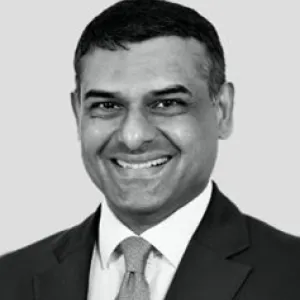
Dr Mukund Rajan
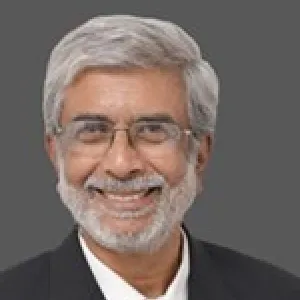
Shankar Venkateswaran
- By request, group prices may be available if an organisation purchases two or more places.
- Places on the course are competitive, however in the occurrence that two weeks prior to the course start date places remain available, last-minute reductions to fill the course may be offered (with the exception of places obtained via deferral).
- Strategic partnership discounts may be available on agreement with ECube.
A discount of up to 15% is available for Oxford alumni and participants who have successfully completed another Smith School Executive Education course. Please contact us in this regard.
Updated January 2026
In brief
| Dates | TBC |
|---|---|
| Course | Online, asynchronous, self-paced and some live sessions |
| Duration | 9 weeks (3-5 hours of study per week suggested) |
| Apply now | Application Form |
| Fee | £TBC (including VAT) equivalent to approximately ₹TBC INR *Discounts available to alumni, the public sector and large groups |
Contact:
Please email Executive Education at executive.education@smithschool.ox.ac.uk