
Oxford Smith School and Bank of America renew partnership to advance research on energy storage and future fuels
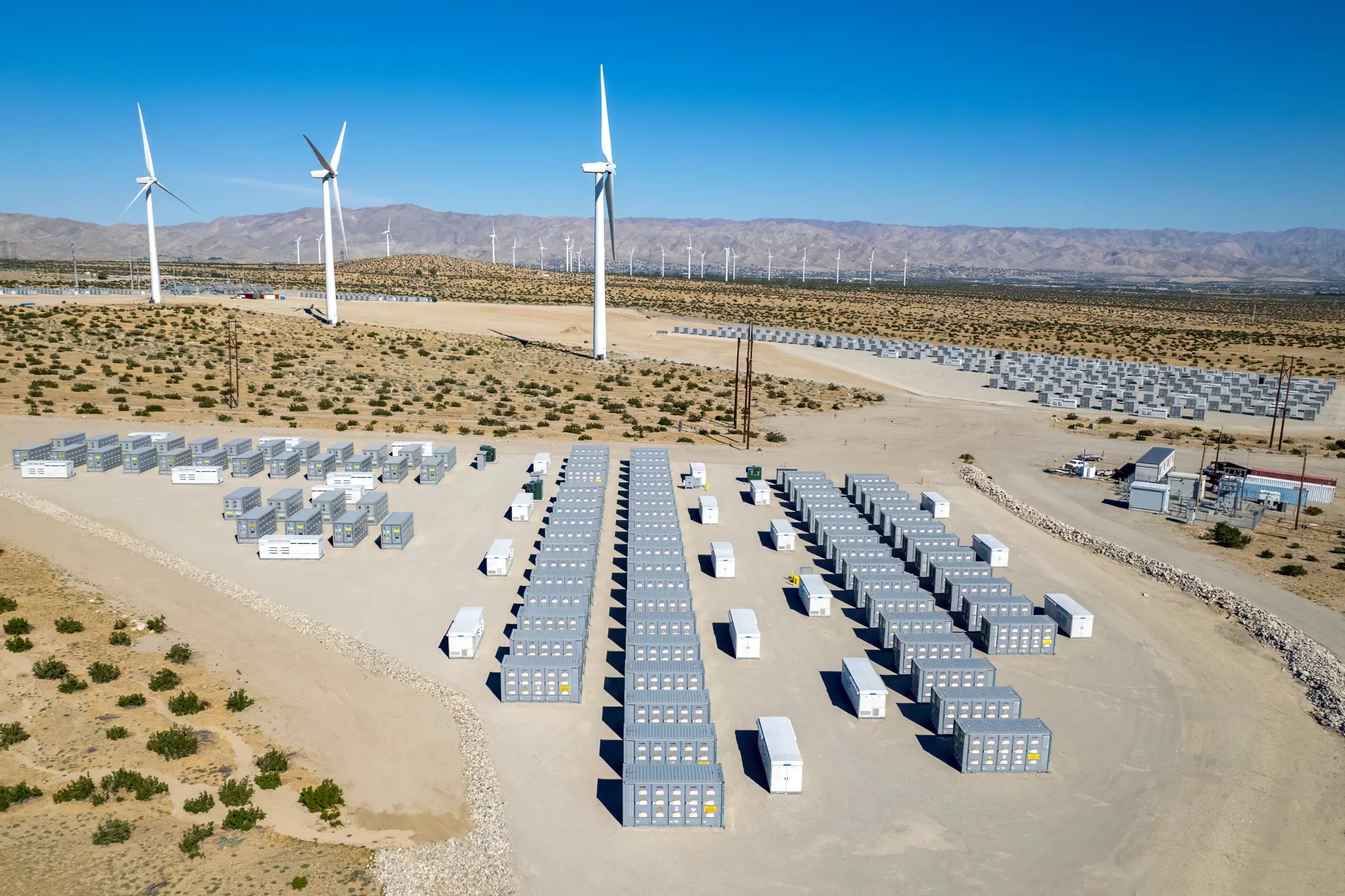
New Oxford Smith School research will examine how energy storage and next-generation fuels could reshape global energy markets, strengthen UK energy resilience and inform major investment decisions.
The University of Oxford’s Smith School of Enterprise and the Environment and Bank of America today announced the renewal of their partnership. Now in its fourth year, the partnership supports new research into the technologies and market forces set to shape the future of energy.
The announcement comes at a pivotal moment, as governments, businesses and investors make far-reaching decisions about how to expand and modernise energy infrastructure while maintaining secure, reliable and affordable supplies.
Led by Professor Doyne Farmer and Oxford’s Complexity Economics programme, the research will focus on two areas with major implications for the UK and global economy: the future of energy storage and the development of next-generation fuels for sectors that are difficult to electrify, including aviation.
Using advanced economic modelling, the researchers will examine how technology costs, infrastructure, policy, geography and company behaviour interact over time. The aim is to identify where bottlenecks may emerge, which technologies have the greatest commercial potential and where investment could deliver the greatest economic impact.
These questions are central to UK energy security and industrial competitiveness. The growth of variable power generation is increasing the importance of storage, transmission and grid management, while aviation and other energy-intensive sectors need commercially viable alternatives to conventional fuels. By examining these technologies alongside the evolving roles of nuclear, oil and gas, the research will provide a real view of how the energy system could develop.
Fernando Vicario, UK Country Executive at Bank of America, said: “Secure, reliable and affordable energy is fundamental to economic growth. Delivering it will require innovation, robust analysis and significant long-term capital.
“Oxford’s research will help identify where technologies can scale, where constraints may emerge and where investment can have the greatest impact. We are proud to renew our partnership and support independent research that can help inform decisions across business, finance and government.”
The programme builds on Professor Farmer’s previous work challenging conventional assumptions about the cost of transforming the energy system. A peer-reviewed study published in 2022 found that a rapid transition to a largely decarbonised energy system by around 2050 could likely save the world $12 trillion in energy-system costs compared with continuing the existing fossil-fuel-based system.
The new programme will extend this data-led approach to some of the most pressing and uncertain questions facing the energy system today.
Professor Doyne Farmer, Baillie Gifford Professor of Complex Systems Science at the Smith School and Director of the Complexity Economics programme at the Institute for New Economic Thinking, said: “Decisions we make today about technology, infrastructure and capital will shape the energy system for decades.
“Our modelling captures the real-world interactions between companies, markets, technologies and costs. It will reveal where risks, bottlenecks and investment opportunities are likely to emerge across storage and future fuels.
“Our earlier work showed how misleading conventional assumptions can be. This partnership gives us the opportunity to bring the same empirical rigour to the next generation of energy challenges.”
The renewed partnership combines Oxford’s research expertise with ongoing involvement from energy and finance practitioners. It will continue to build on the thousands of stakeholders engaged by the partnership to date, convening Bank of America clients, employees and leaders from government, academia and business. This dialogue will help ensure the research addresses the challenges facing market participants, while remaining academically independent.
A partnership with a record of impact: The renewed collaboration builds on Bank of America’s previous support for Oxford Smith School, where the bank’s seed funding enabled Oxford to leverage an additional £4million+ in funding.
- Specifically, the successful partnership helped advance spatial finance, which uses geospatial information to assess environmental and other asset-level risks. This solution is especially important in assessing wildfire risk, increasingly critical today. It also supported two World Forum events at Oxford as well as the landmark State of Carbon Dioxide Removal report and research into financing models for reliable drinking-water services in rural communities in Africa and Asia.
- The partnership with Bank of America directly contributed to the Smith School’s Water programme successfully demonstrating to governments in Africa and South Asia that safe and secure drinking water can be reliably provided to rural schools and health clinics at the cost of US$ 1 per person per year.
The bank’s funding and support has also enabled researchers in Sustainable Food Solutions to develop their work, meet potential collaborators and build up their research network. In turn this has opened doors to collaborators working on Brazilian livestock systems, tracking and tracing illegal livestock movements and trade-offs in farming systems. Researchers are now working on field trials with around 100 Brazilian farmers who own close to 15,000 hectares of farmland and 35,000 cattle, with preliminary results indicating that giving farmers the right information can help reduce their emissions by almost 20%.
The new programme is expected to produce academic and policy-facing publications over the next three years, supported by continued engagement with businesses, investors and policymakers
Notes to editors
The research will be led by Professor Doyne Farmer and Oxford’s Complexity Economics programme.
Its principal areas of investigation will include:
- the changing economics and deployment of energy-storage technologies;
- the interaction between storage, transmission, grid management and different forms of generation;
- the commercial potential of future fuels in aviation and other difficult-to-electrify sectors;
- geographic and land-use constraints affecting biofuel production;
- the effects of different market and policy scenarios on technologies, companies and energy-producing regions; and
- the implications for infrastructure investment, capital allocation and energy security.
About Professor Doyne Farmer
Professor J. Doyne Farmer is Baillie Gifford Professor of Complex Systems Science at the Smith School of Enterprise and the Environment and Director of the Complexity Economics programme at the Institute for New Economic Thinking at the Oxford Martin School. His research includes agent-based economic modelling, financial instability, technological progress and forecasting the costs of energy technologies.
About the Oxford Smith School of Enterprise and the Environment
The Smith School of Enterprise and the Environment at the University of Oxford was established in 2008 to tackle major environmental challenges by bringing public and private enterprise together with world-leading teaching, executive education, and research. Smith School research shapes business practices, government policy and strategies to achieve net zero emissions and sustainable development, transforming economies and governance to ensure people and nature thrive together. We offer innovative evidence-based solutions to the environmental challenges facing humanity over the coming decades. We apply expertise in economics, finance, business and law to tackle environmental and social challenges in six areas: water, climate, energy, biodiversity, food and the circular economy.
For more information visit www.smithschool.ox.ac.uk
About Bank of America
Bank of America is one of the world’s leading financial institutions, serving individual consumers, small and middle-market businesses and large corporations with a full range of banking, investing, asset management and other financial and risk management products and services. The company provides unmatched convenience in the United States, serving nearly 70 million clients with approximately 3,600 retail financial centers, approximately 15,000 ATMs (automated teller machines) and award-winning digital banking with approximately 59 million verified digital users. Bank of America is a global leader in wealth management, corporate and investment banking and trading across a broad range of asset classes, serving corporations, governments, institutions and individuals around the world. Bank of America offers industry-leading support to approximately 4 million small business households through a suite of innovative, easy-to-use online products and services. The company serves clients through operations across the United States, its territories and more than 35 countries. Bank of America Corporation stock (NYSE: BAC) is listed on the New York Stock Exchange.
At Bank of America, we believe that investing in the arts has a positive impact on our lives. We support a wide range of nonprofit organizations with funding and programming to help make the arts more accessible to communities around the world and to preserve works of art and heritage sites for generations to come. For more information about how we support the arts, please visit our Bank of America arts website.
For more Bank of America news, including dividend announcements and other important information, visit the Bank of America newsroom and register for news email alerts.
