
Article 6 at Bonn 2025: The Age of Operationalisation
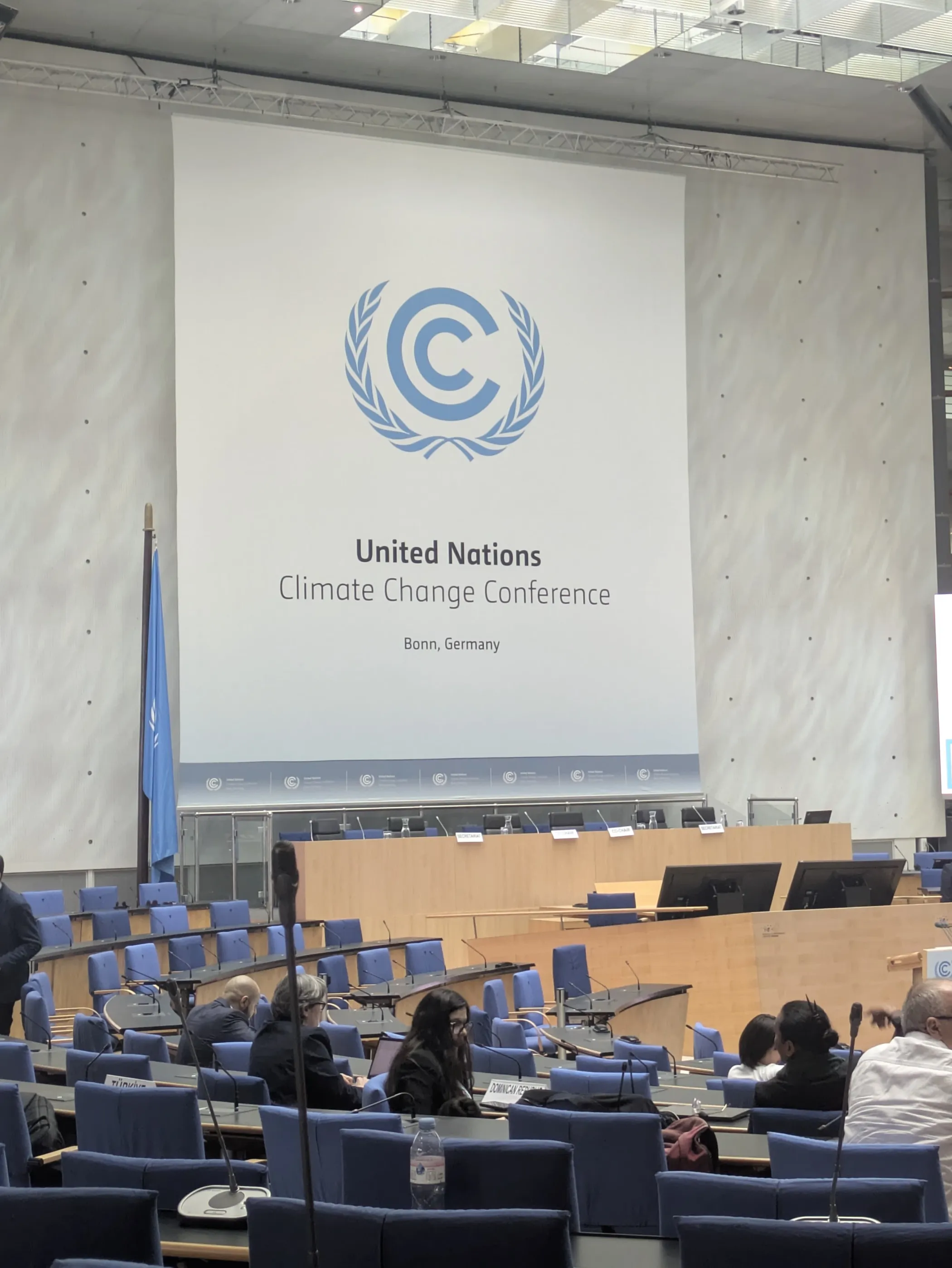
As of 2025, Article 6 has well and truly entered the age of operationalisation. This insight piece from Dr Injy Johnstone, Research Associate in Net Zero Aligned Offsetting, and Sindi Kuci, Researcher at the Oxford Sustainable Finance Group, covers updates on the progress made in operationalising international market and non-market based cooperation under Article 6 during the 2025 Bonn Climate Conference.
Introduction
Matters pertaining to Article 6 have largely evolved beyond negotiation into implementation-focused dialogues and capacity-building work, especially for market-based approaches. Reflecting this shift, the Oxford team has co-designed the ‘Oxford Principles for Responsible Engagement with Article 6’, a collaboration between 15 co-authors and 7 institutions, which was presented in a side event at Bonn 2025.
In this post, we provide an update on the current state of play for Article 6 frameworks including Article 6.2’s ‘Cooperative Approaches’, Article 6.4’s ‘Paris Agreement Crediting Mechanism’ and Article 6.8’s ‘Non-Market Approaches’.
Article 6.2
Article 6.2 allows for unilateral, bilateral and multilateral cooperative approaches concentrated in the international trade of mitigation outcomes. At the time of the 2025 Bonn Climate Conference there were 11 buyer and 51 host countries signalling participation under Article 6.2, leading to 98 Memorandums of Understanding (MoUs) and 21 pilot projects (see Figure 1).
The Article 6.2 “Pipeline”
As of June 2025 there are:
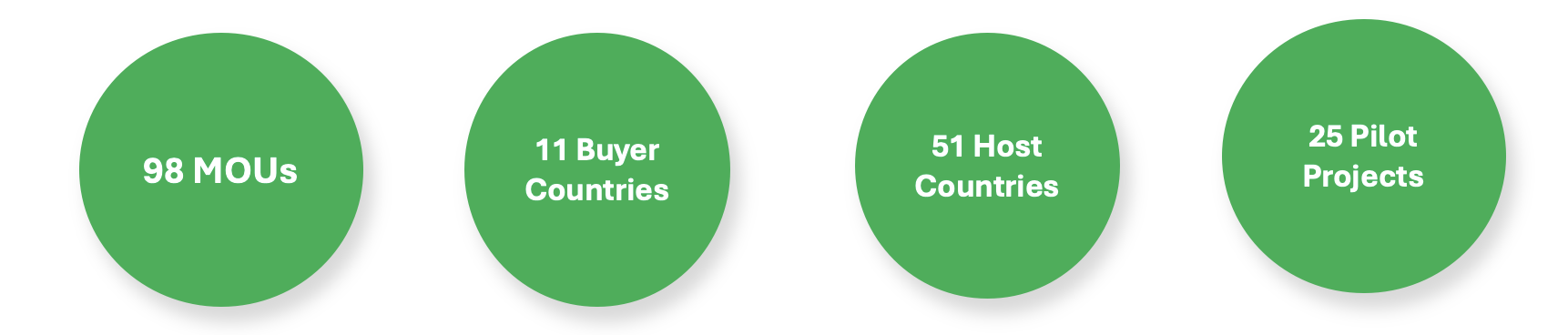
Size: Estimated to generate 7,195,000 tCO2+ by 2030.
Examples Include: Reducing Charcoal Consumption Through Improved Cookstoves (RCCTIC) in Ghana, Battery Energy Storage and Renewable Energy Programme in Senegal, Green Finance for E-Mobility in Dominica, Electrification of Vanuatu’s Inhabited Islands through Solar Power ITMO Program.
Figure 1. Article 6.2 state of play as of June 2025. Author’s own illustration.
At Bonn 2025, discussions pertaining to Article 6.2 took the form of ambition dialogues, creating a platform for country-based insights into this framework’s operationalisation.
Benefit-sharing and fairness were highlighted as key principles to advance ambition of both host and buyer countries participating in Article 6.2, following their integration in Article 6.4 rules, modalities and procedures. Parties identified investment in high-hanging fruit and transformational projects in host countries, equitable burden sharing between host and buyer countries, and benefit sharing with impacted local communities and Indigenous Peoples as some of the avenues through which ambition can be ensured.
Country-level examples
- Brazil presented its plans to implement the first domestic cap and trade system integrated with both the voluntary carbon market and mitigation outcomes generated via Article 6.2. This emphasised the importance of Article 6 governance being linked to monitoring Nationally Determined Contributions (NDCs), as well as flexible host country selling arrangements and frontloading safeguards, including safety margins and contingency reserves.
- The Coalition for Rainforest Nations shared a presentation stating that “carbon avoidance equates to disaster”, distinguishing between REDD+ projects under the Paris Agreement and those on the voluntary carbon market today.
- Japan also shared insights into emerging problems with Article 6.2 operationalisation – including the lack of ability to carry over mitigation projects under this framework between NDC cycles, considering that the most imminent NDC activity cut off is 2030.
Technical updates
Additionally, the UNFCCC Secretariat conveyed updates concerning technical aspects of registry functionality, including the “Additional Registry Services” agreed at COP29. These services will create an integrated international registry to which Participating Parties can opt in or out. Whereas the procedure for the registry has been published, terms and conditions are underway.
The most controversial aspect of these services was the introduction of a new technical “Authorised Mitigation Outcome” (AMO) - a mitigation outcome that has received authorisation but has yet to be internationally traded - with parties present in the room contesting that this was not a useful distinction.
Authorisation and tracking
The Secretariat also conveyed a number of lessons learnt in terms of Biennial Transparency Reviews (BTR), the consistency check generated from the provision of information onto the “Centralised Accounting and Registry Platform” (CARP). The Secretariat announced they will be launching a synthesis report on authorisation and tracking arrangements, and methods for applying Corresponding Adjustments, integrating and reflecting results from the Agreed Electronic Format (AEF). Such an initiative is critical due to the existent capacity gaps in Article 6.2 implementation.
More specifically, as the A6IP reported during Bonn 72 of 90 parties analysed have authorisation and/or tracking arrangements in place or in progress while only 11 of 90 Parties have authorisation and tracking arrangements in place.
Article 6.4
The Paris Agreement Crediting Mechanism (PACM) is a centralised platform overseen by the Article 6.4 Supervisory Body. At the time of Bonn Climate Conference 2025, under Article 6 there were 105 Designated National Authorities communicated by participating parties, and 1034 projects registered for prior consideration, out of which 64 were carbon dioxide removal (CDR) project (see Figure 2).
Paris Agreement Crediting Mechanism
As of June 2025 there are:
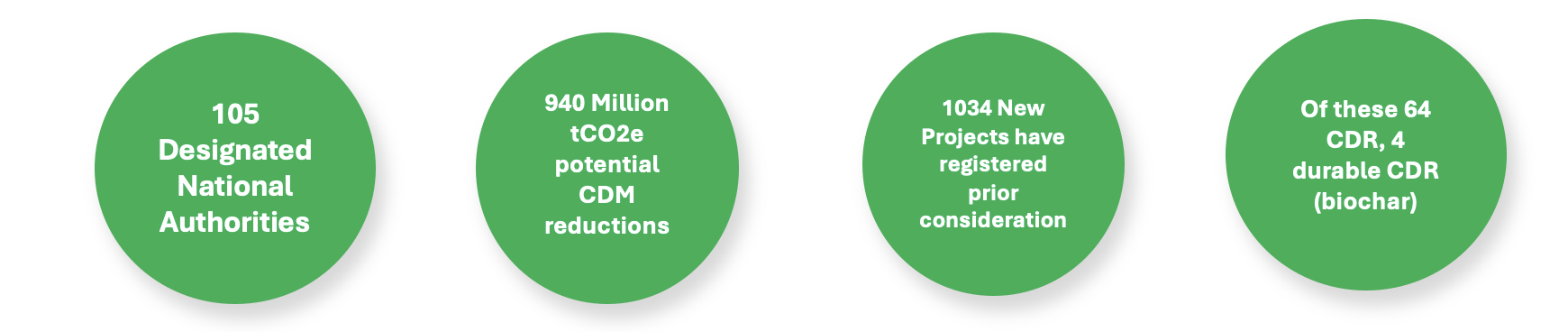
Potential Size: Legacy CERs– 940 Million tCO2e, New PACM Projects 724 million tCO2e annually
Examples include: IZZ landfill gas recovery project in Oman, Safe drinking water project in Kenya, Horizonte Wind Farm Project in Chile, Dak Lak Wastewater Treatment with Biogas System and Methane Recovery in Vietnam. Reducing Charcoal Consumption Through Improved Cookstoves (RCCTIC) in Ghana, Battery Energy Storage and Renewable Energy Programme in Senegal, Green Finance for E-Mobility in Dominica, Electrification of Vanuatu’s Inhabited Islands through Solar Power ITMO Program.
Figure 2. Article 6.4 state of play as of June 2025. Author’s own illustration.
The focus for the PACM was identifying some of the progress the Article 6.4 Supervisory Body has made, including in terms of the downwards adjustment in accounting, and integrated reporting for mitigation activities.
Throughout Bonn, several stakeholder-focused events opined on the PACM setting a new quality standard with reverberating implications for Article 6.2 and global carbon markets more generally.
The Secretariat held a full day capacity building training for stakeholders concerning how the PACM will be operationalised. Topics discussed included standards for the development and approval of new PACM methodologies, the interim PACM registry, the authorisation process for mitigation outcomes, and the transition of Clean Development Mechanism (CDM) activities to PACM. A specific point of concentration in the capacity-building day was the use of Mitigation Contribution Units (MCUs) under Article 6.4. In dialogue with the audience, the Secretariat emphasised that mitigation contribution approaches should not be utilised for offsetting-based claims, given the risks involved with potential double counting.
Events were also held reviewing operational elements pertaining to the training of Designated National Authorities (DNAs). As of May 2025, 105 Parties have communicated their DNAs with the Secretariat.
Article 6.8
Negotiations for the operationalisation of non-mitigation approaches (NMA) under Article 6.8 turned into one of the more contentious of the Article 6 topics at Bonn, speaking to its less developed nature as compared to market-based frameworks.
Under negotiation were barriers of implementation, the role and scope of the NMA platform, including its user profile, i.e. whether registration of NMAs should be Party- or user-driven, and perhaps most importantly, identification and definition of NMAs themselves, including their role in NDC achievement and their situatedness alongside projects developed under other Paris Agreement levers.
Within the latter, some Parties proposed that NMAs should predominantly take the form of adaptation activities with strong mitigation co-benefits, joint mitigation and adaptation efforts, as well as enhanced efforts to avoid deforestation–complementing and filling in existing financing gaps in Article 5 and Article 9 of the Paris Agreement, which cover results-based finance and public climate finance (including for adaptation activities), respectively.
Other Parties warned against merging Article 6.8 and 5.2.
Ultimately, the Article 6.8 negotiation room closed with no outcome or consensus could be reached and Parties will be considering these matters afresh come COP30.
Clean Development Mechanism
Negotiations pertaining to the wind up of the CDM which stalled last year returned in earnest at Bonn. These negotiations mainly included discussions on potential flows of CDM Fund to the Adaptation Fund and the timeline for the transition of carryover CDM activities under PACM, with Parties requesting a study be conducted on the annual cost implications of delaying this timeline ahead of COP30.
These points of contention are reflected in the draft conclusions of the Secretariat. Ultimately, in the sessions held during SB62, no progress could be made with a draft recommendation forwarded for consideration at COP30 with two key options still on the table – no major progress has been made on closing this item.
Conclusion
In sum, developments at Bonn in relation to the Paris Agreement’s two major frameworks enabling carbon trading, Article 6.2 and the PACM established under Article 6.4, focused on their implementation in practice and means of ensuring high ambition by participating Parties.
The main outstanding issues are the technicalities surrounding the creation of an international registry under UNFCCC, and the transition of CDM legacy activities to PACM. In contrast to these two frameworks, the negotiations surrounding Article 6.8 remain open and contentious, particularly on the definition and nature of NMAs and platform features and use.