
Article 6 in Focus: outcomes from COP30
Dr Injy Johnstone & Sindi Kuci
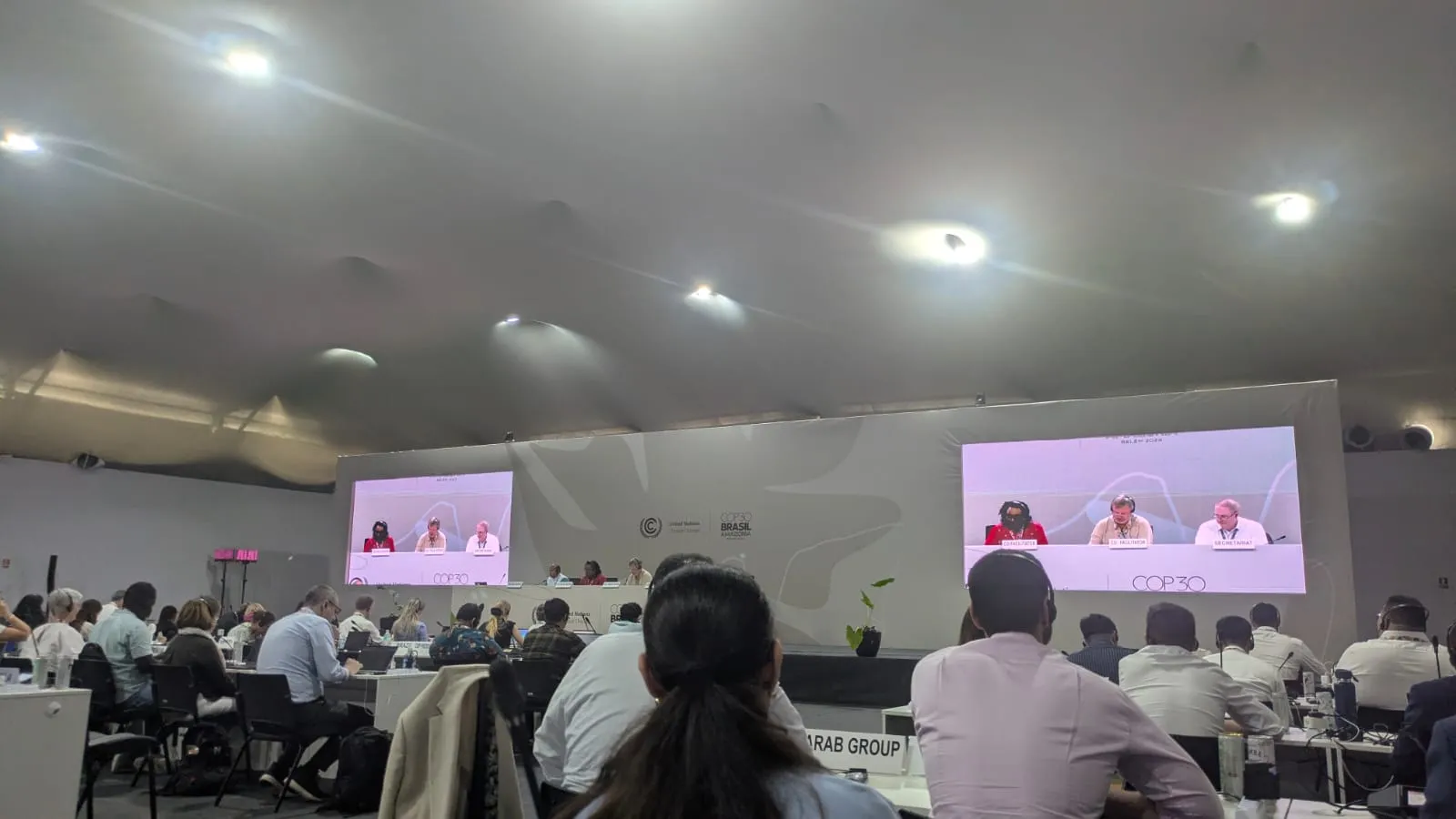
The Brazilian Presidency described this year’s COP as one focused on implementation. This proved true for the negotiation track on carbon cooperation under Article 6 of the Paris Agreement. While negotiators had planned primarily to discuss the closure of the Clean Development Mechanism (CDM) and review the first year of cooperative approaches under Article 6.2, COP30 ultimately delivered substantive outcomes across all Article 6 components: Article 6.2 cooperative approaches, the Paris Agreement Crediting Mechanism (PACM) under Article 6.4, and non-market approaches under Article 6.8. This article unpacks developments in each of these streams and their implications.
Article 6.2 – Cooperative Approaches
Article 6.2 cooperative approaches are Party-led activities that generate internationally traded mitigation outcomes (ITMOs). In line with the COP29 mandate, an Article 6.2 Ambition Dialogue took place during COP30, building on the one held during Bonn SB62. Open to observers, these Party-to-Party exchanges highlighted individual Parties’ experiences in using cooperative approaches and fostered discussions on how the collective rigour and ambition of cooperative approaches could be strengthened.
Notable experiences shared include:
- The Republic of Korea has finalised memoranda of understanding (MoUs) with 10 countries through its Mitigation Council and is creating programs to strengthen the readiness of host countries for implementation, for which it has now received funding.
- The United Kingdom and Australia indicated that they do not plan to use Article 6, as they expect domestic mitigation efforts to be sufficient to meet their climate targets.
- The European Union, by contrast, continues to debate using ITMOs to achieve its 2040 climate neutrality target. Similar to the Republic of Korea, it is supporting host countries by developing an Integrated Assessment Framework for Article 6 to help align cooperative approaches with national mitigation strategies
- Norway plans primarily to establish MoUs for policy-driven activities, especially in the renewable energy sector.
- Host countries including Kyrgyzstan, India, and South Africa are developing bespoke regulations to guide Article 6 engagement.
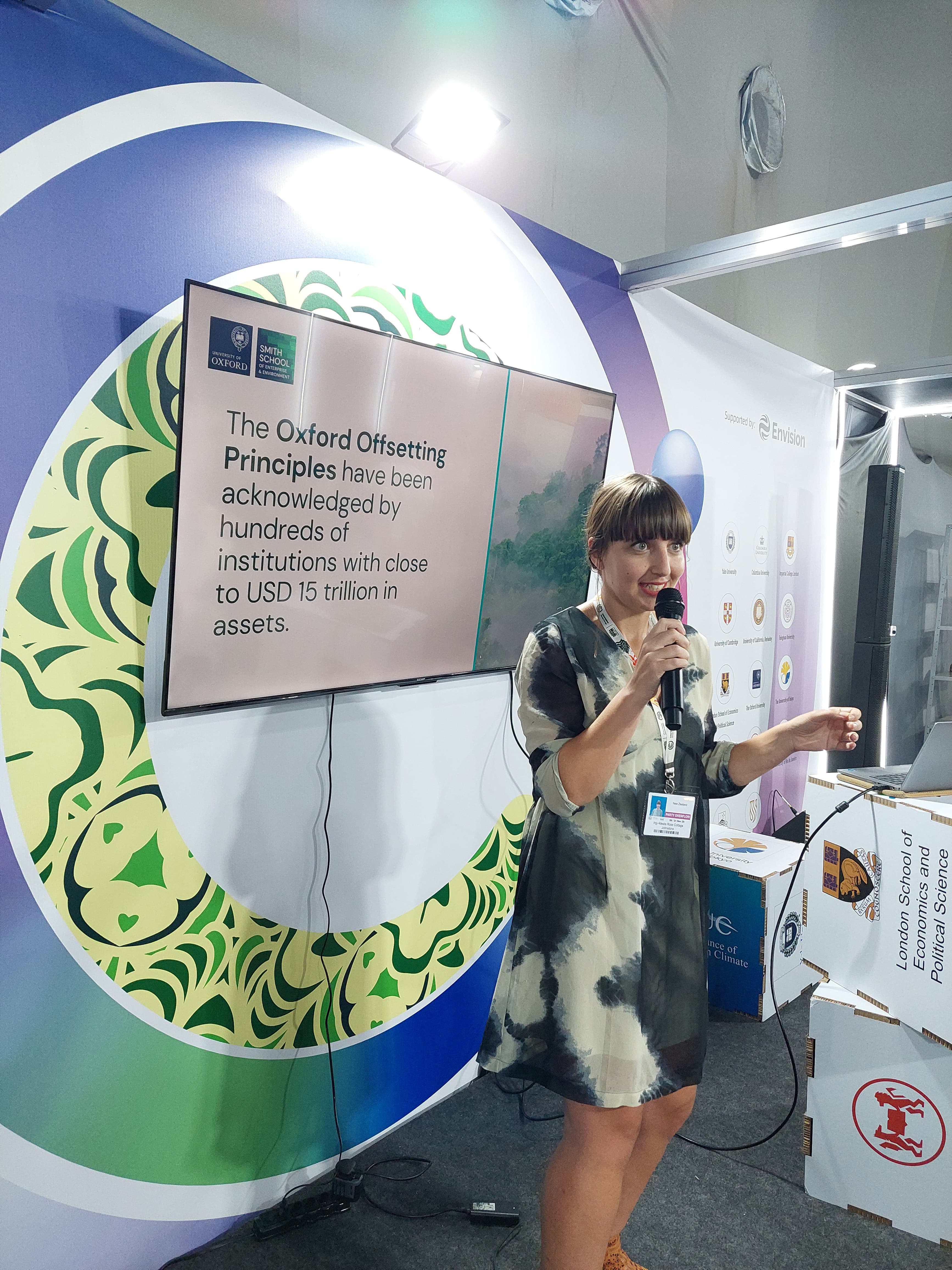
As host countries are creating their climate targets and transparency frameworks, the need for continuous capacity-building and both North-South and South-South cooperation was emphasised. The need for countries to create strong regulatory domestic foundations and institutional frameworks was re-iterated, as was also highlighted by the Roadmap to Net-Zero Aligned Carbon Market Regulation. The Ambition dialogue further recognised the need to responsibly use market mechanisms under Article 6, in order prevent host countries from overselling ITMOs at the expense of their own Nationally Determined Contributions (NDCs), and to use Article 6 as a mechanism to contribute to further mitigation abatement beyond NDC targets through the financing of transformative projects in line with the Oxford Principles for Responsible Engagement with Article 6.
Although no substantive negotiations were planned for Article 6.2 at COP30, the acknowledgement of the secretariats report on technical expert reviews, prompted a strong response, resulting in new guidance being produced at COP30.
This first round of reviews had identified several weaknesses, including inconsistencies in the information provided by Parties, as compared to CMA guidance. While some Parties expressed concern with the number of inconsistencies found, others ascribed this to the nascent nature of these mechanisms. Notably, the trading and use of credits with identified inconsistencies was allowed.
Some Parties sought a more detailed and substantial approach to future synthesis reports. There were subsequent attempts to encourage further data quality [Para 31, v18/11] and distinguish between reductions and removals. However, in the final version of the text, these recommendations were absent. The UNFCCC Secretariat was further encouraged to continue providing support in capacity-building to implementing Parties, in the form of workshops and webinars.
Article 6.4 – Paris Agreement Crediting Mechanism
The Paris Agreement Crediting Mechanism follows on from the Clean Development Mechanism under the Kyoto Protocol by providing an international carbon crediting system that can generate internationally traded mitigation outcomes and/or mitigation contribution units, each representing one verified ton of carbon dioxide equivalent The final negotiated text on the PACM was perhaps one of the thornier issues at COP30, specifically in light of the debate surrounding the standard addressing non-permanence and reversals in mechanism methodologies published the month prior to COP30. Indeed, there were a number of substantive issues that arose.
Early in week one, negotiators considered draft text that would have exempted nature-based solutions from several environmental-integrity provisions already agreed under the PACM, including downward adjustments [para 20, v 13/11] and leakage [para 26, v 13/11]. Although these proposals were ultimately removed in the next draft, they nevertheless set a concerning precedent given that the rules on reversals had only recently been agreed, and despite misconceptions that nature-based solutions were excluded from the mechanism.
The PACM is pathway-agnostic and includes all project types that meet eligibility criteria, making it broader in scope than the CDM, which had excluded emission-avoidance projects which were deemed adaptation instead [P14, FCCC/CP/2000/5/Add.2].Parties discussed safeguards to ensure that experts advising the Supervisory Body do not hold conflicting financial interest [Para 12, v 21/11]. Broader efforts to shift the Supervisory Body’s role from one of supervision to promotion of the mechanism [Para 19, v 13/11] were undermined and the corresponding text removed.
One of the key outcomes under Article 6.4 was linked to the closure of the CDM (see below). extension on the deadline for host countries to authorise activities to transition to 30 June 2026. This is key considering that, as of mid-November, authorisation for CDM activities to transition to PACM had been given to only 359 out of 2462 activities & programmes of activities that had applied.
There were also broader efforts to promote stakeholder engagement and transparency (Section III, v 21/11) under the PACM. This was viewed as essential as the mechanism had been consulting on a significant volume of substantive work but often with very short turnaround times. Moreover, despite Article 6.4 Supervisory Body meetings being livestreamed publicly, the Methodological Expert Panel and any other constituted expert bodies in future were not subject to the same rules.
Clean Development Mechanism
The Clean Development Mechanism (CDM) was the world’s first international crediting mechanism when it was established under the Kyoto Protocol. Having been in operation for close to 20 years, several lessons have been learnt concerning its implementation, including the importance of ensuring environmental integrity, due to allegations of the CDM causing trade in “hot air”.
One of the landmark outcomes of COP30 was the agreement to close the CDM. After years of contentious discussions, Parties adopted the earliest option for winding down the CDM: with activities phasing out in 2026, and full cessation in 2027. This provides long-awaited clarity to the market and supports the transition to the PACM, which is underpinned by more robust methodologies. Choosing the earliest deadline preserves the greatest possible balance from the CDM Trust Fund and ensures the orderly shutdown of the international transaction log, further freeing up finances to facilitate the build out of Article 6’s trading infrastructure. Parties agreed to transfer remaining funds to the Article 6.4 Trust Fund, with the intention that they be repaid in the future to maximise long-term benefits for the Adaptation Fund [para 18, v 21/11].
Article 6.8-Non Market Approaches
Article 6.8 covers all non-market based forms of cooperation under Article 6, with various topics being proposed under it from adaptation measures to sustainable tourism. Non-market approaches have persistently been less developed than the streams of work under Article 6.2 Cooperative approaches and Article 6.4 PACM. During the sessions held on Article 6.8 implementation during COP30, several aspects of the platform for non-market approaches was canvassed in the final text.
Despite new resources being made available—including webinars, a user manual, and a regional workshop—the Secretariat reported low engagement with the Article 6.8 Non-Market Approaches platform. Only three approaches have been registered to date, compared with 31 support providers. Parties cited practical usability issues such as unclear filters, mapping tools, and categorisation, and the final decision mandates technical upgrades to address these concerns.
The low utilisation of Article 6.8 was ascribed to engagement with the mechanism requiring two or more Parties. Some Parties advanced the position that allowing unilateral nonmarket approaches would increase visibility of Parties’ needs/opportunities and further enable for support matching.
Other thematic suggestions for topics of work under Article 6.8 prompted the creation of spin-off groups, including ones investigating ecosystem restoration and eco-tourism models. In 2026, the mechanism will undergo review by Parties with a view to improving the platform and avoiding duplication across existing workstreams under the Paris Agreement.