Breaking barriers: two Smith School alumni discuss their paths to Oxford
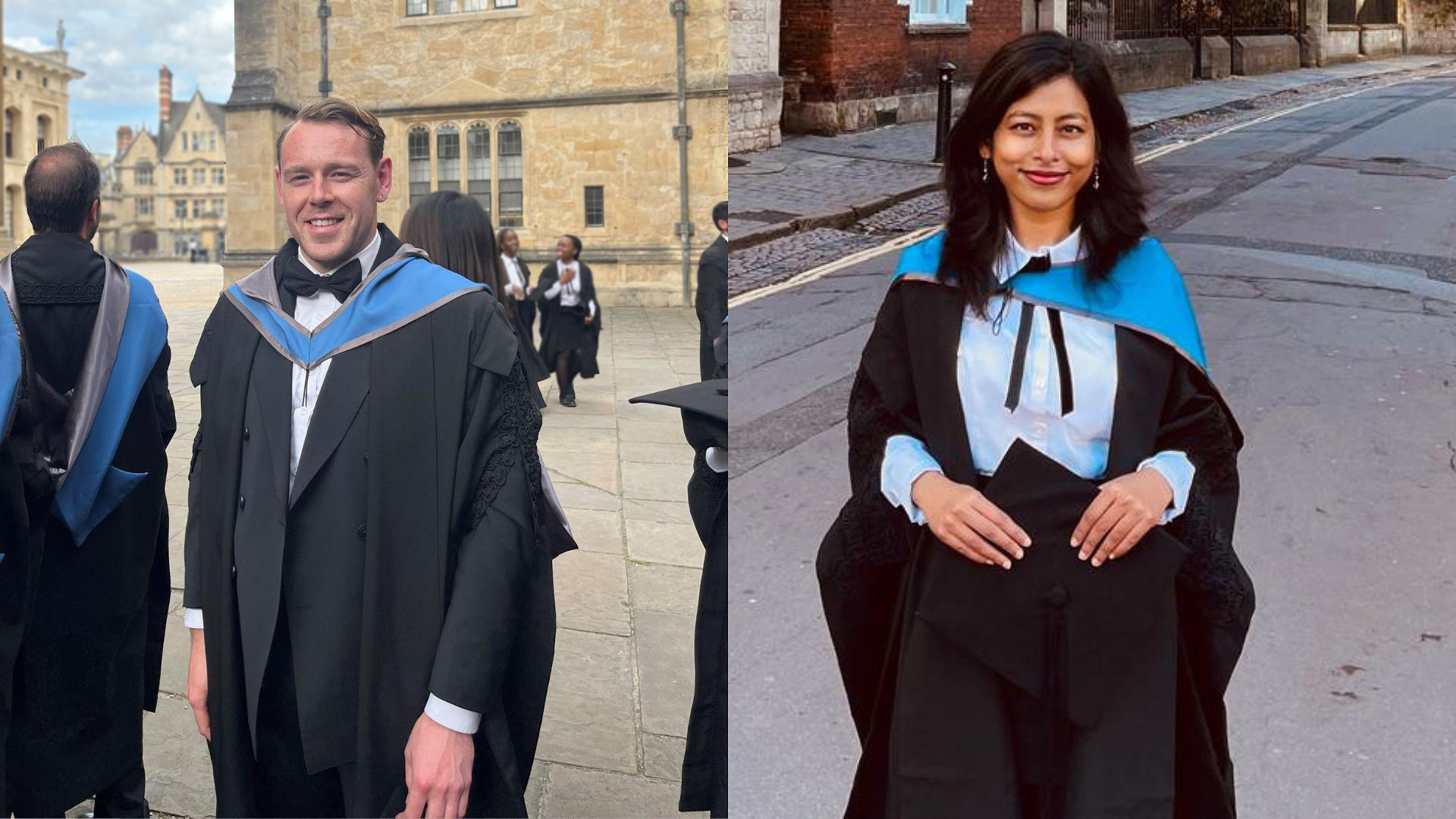
Each year, applicants to the Oxford Smith School MSc in Sustainability, Enterprise and the Environment are automatically considered for scholarships, which range from a contribution to their course fee, to full fees, accommodation and a living stipend. Scholarships allow people from all walks of life to come and study at Oxford, breaking down barriers that could otherwise prevent exceptional applicants from attending.
Aurona Sarker
Aurona Sarker completed the Smith School MSc in 2023. Two years later, she is a Senior Associate in ESG, Carbon & Climate at Apex, a financial services company. “I come from Bangladesh, a country where being a Hindu—a religious minority—often means facing systemic challenges,” explains Aurona. “My parents, raised in rural villages where small farming was the main occupation for generations, never had the chance to attend college. My sister and I were the first in the family to pursue higher education.”
“In my community, educating daughters is often seen as a wasted investment,” continues Aurona. “To this day, our family is pitied for having no sons—because, in the eyes of many, daughters are financial burdens who cannot support their parents.”
Aurona pushed through these societal barriers by “fighting for every scholarship opportunity available” to fund her education, securing herself an undergraduate degree in Politics, Philosophy and Economics from Asian University for Women. “Every step forward felt like defying the odds,” she said.
Driven to continue her academic studies, Aurona applied to the Smith School MSc after reading about an alumna from Bangladesh in a University brochure.

“At that time, I didn't know even one person who studied at Oxford, and reading the alumni story widened my world. Until that moment, I hadn’t even dared to imagine Oxford as a possibility for myself.”
Aurona describes her disbelief when an offer from the University came in the post. “When I received my offer from Oxford, I couldn’t celebrate yet. I had to hold my breath for the scholarship decision, knowing that without full financial support, attending would simply be impossible. When the Linbury Trust awarded me a fully funded scholarship, I finally allowed myself to believe it was real. Oxford was a life-changing experience—an incredible opportunity that changed the course of my life with knowledge, resources and like-minded community. Meeting brilliant minds and witnessing their passion for shaping the world strengthened my own conviction to pursue my dreams.”
Lewis Ireland
In the year Sarker completed her MSc, Lewis Ireland enrolled with a full Oxford-Reuben Graduate Scholarship. His journey had been tough; at age 14, his mother died suddenly, and his relationship with his father broke down.
“It was a bit of a wild ride. I feel lucky to have survived it,” says Lewis, who now
works at Dasseti as a Lead ESG analyst. “I ended up living with different family members and was homeless for a time.”
Despite a curiosity for learning, Lewis suffered from behavioural issues and anxiety at school, and left his A Levels to study photography. “My mental health was so poor at that time, I became detached,” he says.
Whilst studying photography, he had to take on night shifts at a supermarket to support himself, and was lucky to have an understanding tutor who supported him through the course and was able to pass and apply to university. The University accepted his application, but when he couldn’t get the support of a family member to sign his student finance documents, he had to leave.
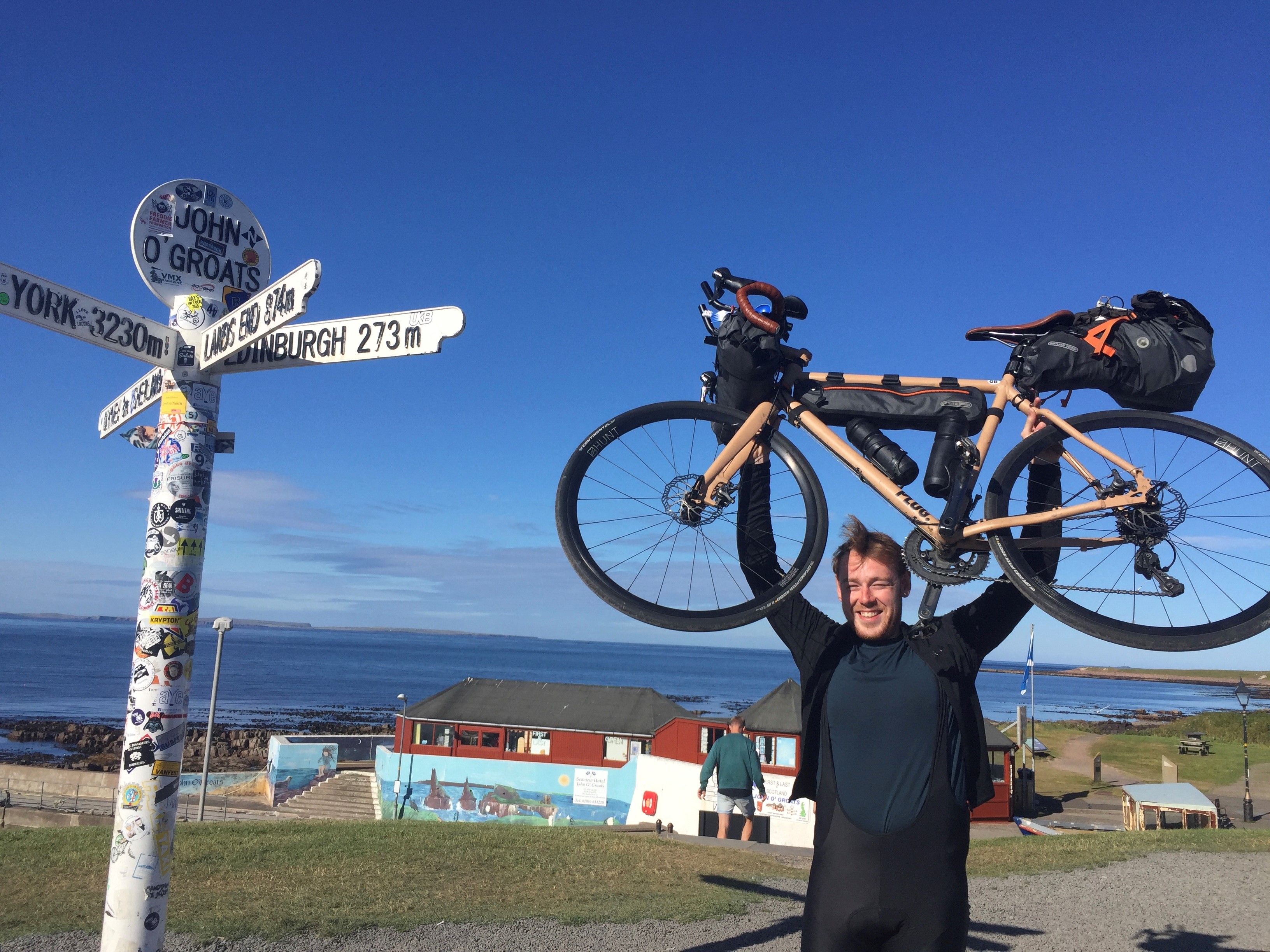
At what seemed like a dead end, Lewis took a chance and moved to Austria, where he worked in catering and built his confidence back up through work and cycling. When the time came to return to the U.K., he cycled the whole 900 miles back.
Lewis then focused on roles in which he could help others in difficult situations, including Human Rights Advocacy at a mental health charity. At the same time, he studied a degree in Politics, Philosophy, and Economics at Goldsmith’s, University of London, which he passed with first class honours.
After leaving Goldsmith’s Lewis was admitted to the UNIQ+ programme at Oxford. “The support and guidance of people in this internship made Oxford feel almost achievable,” he says.
Having focused on sustainable finance for his dissertation, Lewis decided to pursue a career in sustainability, and applied for the Smith School MSc. “When you have lived with insecurity and distress it becomes crystal clear how interlinked these systemic problems are.”
“The question of climate change is fundamental to human life,” continues Lewis. It’s a leverage point to think about how we engage with one another and how we live our lives. And unfortunately, we’re almost sleepwalking into a future where climate change will increase the instability I experienced growing up. Stability and security are fundamental to human flourishing and I wanted to focus my efforts on trying to help to solve these issues.”
Lewis describes the moment he was accepted as a “massive boost to my sense of self. It was always a dream of mine to study at an institution like Oxford, to learn and be surrounded by knowledge. It opened up new ways of thinking and really taught me the language of sustainability that I didn’t have before. It’s brought me opportunities I never would have had.”
But Lewis is upfront about the challenges as well. “As much as I loved the traditions at Oxford, it was difficult to adjust to college dinners when I had grown up visiting foodbanks. I was conscious I was from a different background to most of my classmates. But I felt valued – they appreciated my perspective, even if they sometimes told me not to existentialize everything so much”!
“I think I’m more pragmatic now than before I studied the MSc,” reflects Lewis. “I recognise that these power structures do exist, and that we can’t just will that away. We have to work with them. I’m really enjoying my career, and hopeful that I can use the knowledge I gained during my time at the Smith School to change things for the better.”
Dr Laurence Wainwright, Director of the Oxford Smith School MSc in Sustainability, Enterprise and the Environment, comments:
“The immense diversity of backgrounds, nationalities and worldviews in our MSc cohort is one of the programme’s greatest strengths. We welcome and encourage applications from all socio-economic backgrounds. With the wealth of scholarships on offer at the University of Oxford, a lack of financial resources should not be a barrier to a world-class education in sustainability, enterprise and the environment, and I’m delighted to see what Aurona and Lewis have gone on to achieve following their time in the programme.”