Stepping back to gain perspective on long-term sustainable trends
Custom Executive Education at the Smith School
We design our bespoke executive education programmes to equip leaders from business, NGOs, the public sector and government with the skills to transform their organisation’s approach to sustainability.
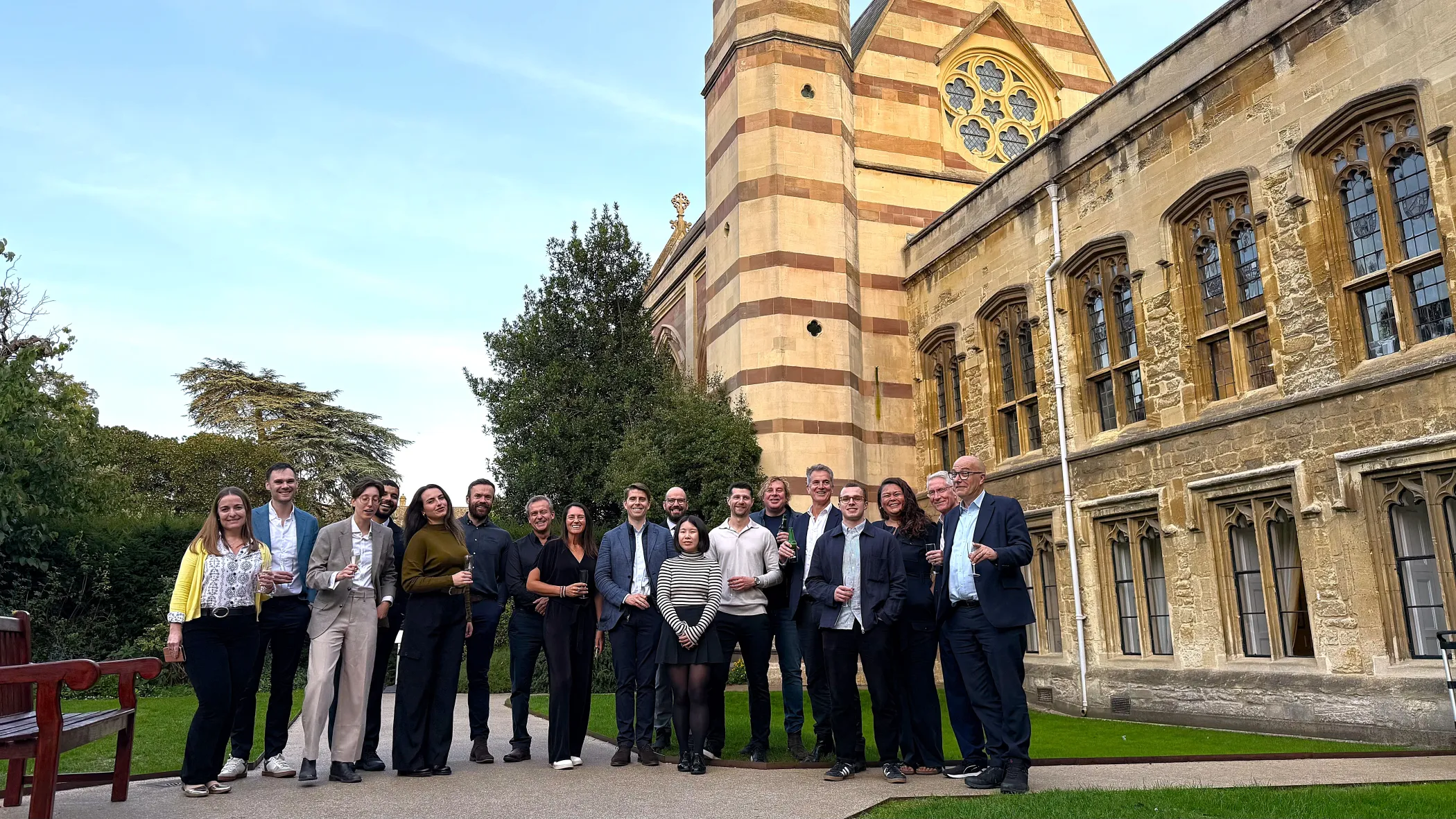
Peter Michaelis, Head of the Sustainable Investment Team at Liontrust PLC, reflects on a recent custom Executive Education course developed with the Oxford Smith School.
Earlier this month we spent time at the Smith School of Enterprise and the Environment, Oxford University looking at the challenges and solutions across energy, transport, agriculture, materials and demographics.
At its core, the Sustainable Future funds offer investors a strategy that aims to back those companies that will succeed as our world becomes cleaner, healthier and safer.
But how do we find these particular businesses? How do we predict which solutions will be the successes?
One key element is to lean on experts that think further ahead: 5, 10, 20 years out.
We believe that stepping out of the day-to-day newsflow is critical if we are to make correct decisions about the shape of our future economies. Day to day, it is easy to feel that change is just a gradual extrapolation of what we do today.
Only by stepping back do we see that change is often discontinuous and very rapid. It was fascinating to hear different perspectives from leading thinkers in their field and to discuss how these could relate to the sustainable themes that underpin our investment selection.
Some key takeaways include:
- Simply moving to electricity makes energy systems much more efficient. Electric vehicles are 85% efficient at converting energy to motion whereas the internal combustion engine is barely 30%.
- Solar, wind and batteries are still seeing rapid improvements in efficiency and cost, while fossil fuels have plateaued. But the critical missing piece is long-term energy storage.
- The concern that the transition will require vast amounts of material is hugely overstated. The annual requirement for the transition is 50x less than the amount we extract for the fossil fuel system.
- There are different technologies and standards for extracting and refining resources which have a wide range of environmental and social outcomes. Circular resource use and innovation (even using plants to extract minerals) is needed to improve the impacts of mining and refining.
- Transport is evolving away from a pure focus on owned automobiles to mobility as a service. This encompasses high quality mass transport, e-bikes/scooters, ride hailing, and car pooling. This will create benefits for road safety, quality of life in cities, economy and ease of use.
- Different diets have 10-20x different impacts on energy and biodiversity, and in pure energy terms transport (or food miles) is a very small part.
- On demographics, predictions are for a peak global population of 10.3 billion (from 8.2 billion today) in 2030, followed by gradual decline. Within OECD, ageing and lower birth rates imply an increasing dependency ratio.
Overall, our time at the Smith School of Enterprise and the Environment reinforced our view that almost all the ingredients exist today for a world of plentiful energy, food, health and mobility with dramatically reduced impacts on our planet. We will continue to incorporate this longer term thinking into our investment themes to find those companies that will accelerate the move to this more sustainable future.
Dr Giovani Palafox-Alcantar, Head of Executive Education at the Oxford Smith School, comments:
“It was a pleasure to work with Lion Trust PLC on this two-day custom programme, which covered topics from energy trends to sustainable transport and critical mineral demand. Making a return from green investments is essential if the world is to transition to a sustainable net zero future, and so we are proud that our research is contributing to informed, forward-looking decision making.”
Learn more about our bespoke executive education programmes.
Custom Executive Education at the Smith School
We design our bespoke executive education programmes to equip leaders from business, NGOs, the public sector and government with the skills to transform their organisation’s approach to sustainability.