
Trade and sustainable development: how they intersect in a changing world
Msc SEE alum insights
Valery Salas Flores is an alumna of the Smith School's MSc in Sustainability, Enterprise and the Environment.
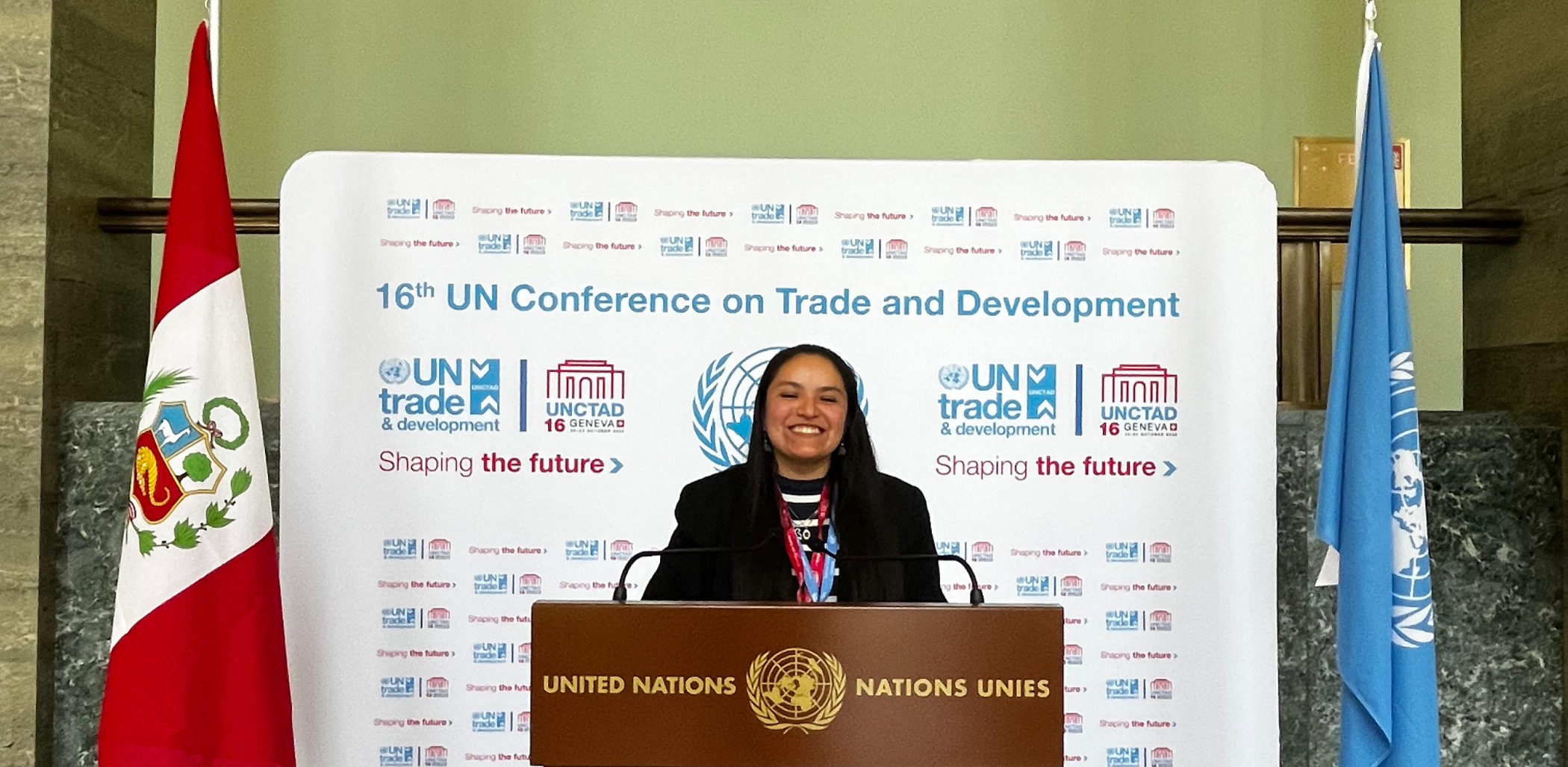
Reflections from the 5th UNCTAD Youth Forum in Geneva by MSc SEE alumna Valery Salas Flores
When we think of trade, we often picture shipping containers moving across borders or graphs showing markets rising and falling. Yet at the 16th United Nations Conference on Trade and Development (UNCTAD16), held this October at the Palais des Nations in Geneva, the conversation went far beyond exports and tariffs. It asked a deeper, more urgent question: how can trade become a genuine pathway to sustainable development?
This year’s conference, themed “Shaping the Future: Driving Economic Transformation for Equitable, Inclusive and Sustainable Development,” brought together heads of state, ministers, and young leaders from around the world. Across sessions on digital inclusion, sustainable finance, and climate resilience, one idea stood out: sustainable development will remain out of reach unless we rethink how trade works, not only for economies but also for people and the planet.
Development against the odds
The UN’s Sustainable Development Goals Report 2024 revealed a sobering reality: only 17% of global SDG targets are on track. Meanwhile, the climate crisis (cited by world leaders in over 190 UN speeches) has overtaken all others as the greatest threat to global prosperity.
In this context, UNCTAD16 called for a fundamental shift: towards diversified, inclusive, and sustainable economies supported by stable finance for development. Traditional metrics such as GDP growth, which fail to capture well-being or environmental integrity, are no longer sufficient. The real question is not how fast economies grow, but how well that growth is shared, sustained, and safeguarded for future generations.
Trade remains central to that challenge. Countries heavily dependent on commodity exports must use trade revenues to diversify, acquire new technologies, and build resilience. Yet they cannot do this alone. Global cooperation, innovative finance, and equitable governance, what the UN calls “networked multilateralism”, are essential to ensure that trade acts as a bridge to shared prosperity, not a barrier to it.
Speaking on green transitions and youth leadership
Amid these global debates, I had the honour of serving as a panellist in the session “Green Rising: Young Adults Shaping a Sustainable Future,” the opening discussion of the 5th UNCTAD Youth Forum.
We aimed to explore how young people are confronting the multifaceted impacts of environmental challenges. Through open dialogue and group discussions, we created an interactive and honest space within the broader context of the barriers young leaders face, from financing and entrepreneurship to representation in policy processes.
I shared reflections on how youth from the Global South are driving transformative climate action despite systemic constraints in access to finance, policy inclusion, and institutional trust. My central message was that “green rising” is not only about environmental ambition but also about justice, opportunity, and resilience.
When we centre young people, particularly those from vulnerable regions, in conversations about green transitions, we build not only sustainability but shared prosperity. And when trade systems recognise youth as innovators and stakeholders rather than beneficiaries, we unlock new pathways for inclusive growth.
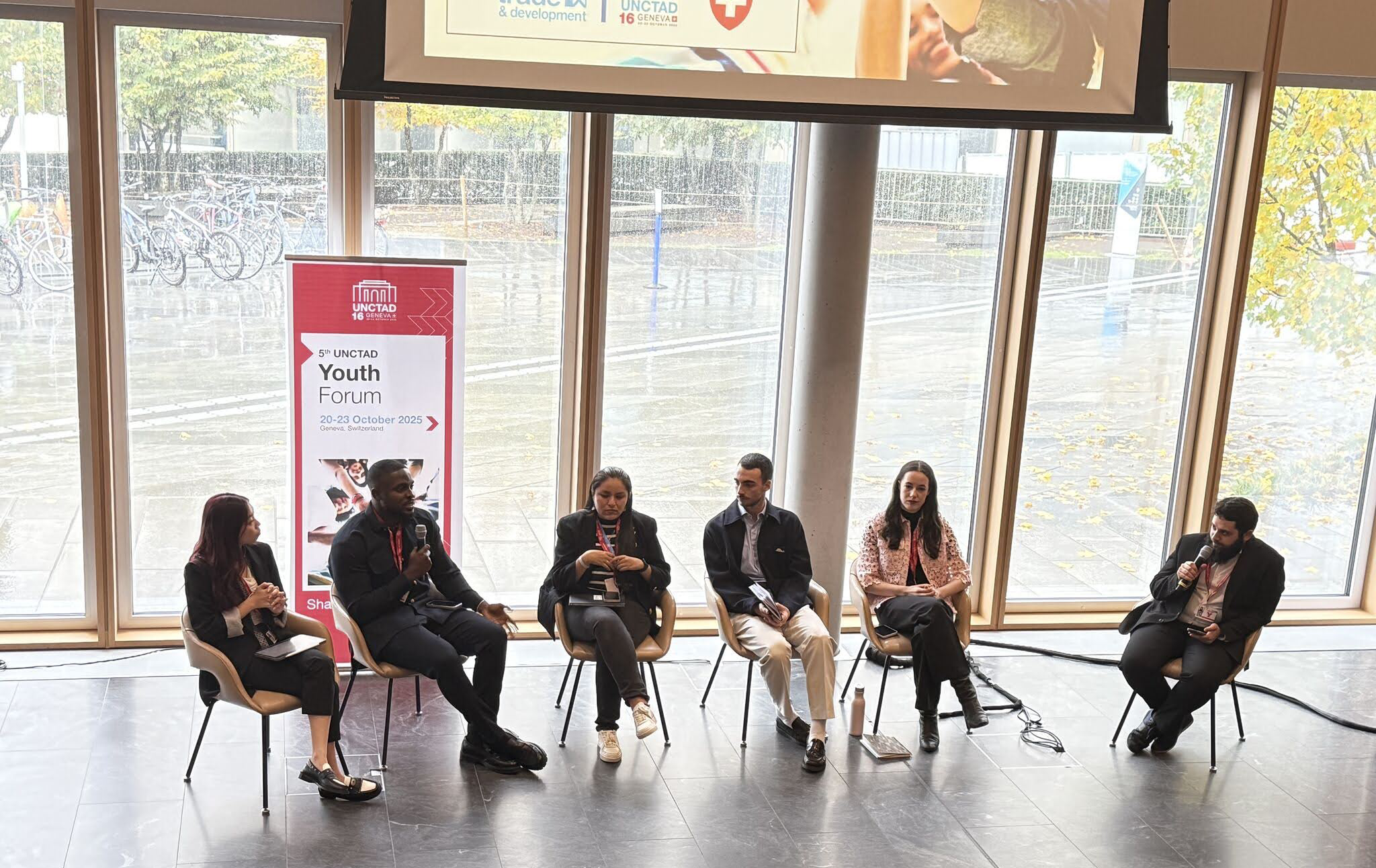
In the photo: “Green Rising: Young Adults Shaping a Sustainable Future,” the opening discussion of the 5th UNCTAD Youth Forum. Credit: Valery Salas Flores
Trade as a tool for climate and social resilience
UNCTAD16 underscored that global trade must evolve to build resilience not only in supply chains but in societies. Sessions on Climate-Resilient Development and Financing for Development focused on mobilising international capital for sustainable infrastructure, renewable energy, and green skills.
The conference also reminded us that poorer economies contribute less than 4% of global emissions yet bear the most significant burden from climate-related disasters. For trade to be truly sustainable, it must help these economies adapt and diversify, ensuring fair access to finance, technology, and global markets.
From this perspective, trade and sustainability are not opposing goals. Trade, when governed inclusively, can:
- Reduce poverty and inequality (SDGs 1 & 10) by integrating developing economies into global markets.
- Create decent work and innovation (SDGs 8 & 9) through industrial diversification and technology transfer.
- Advance climate action and resource efficiency (SDGs 12 & 13) by enabling transitions to low-carbon and circular economies.
Achieving this potential requires moving beyond a “growth-at-all-costs” mentality toward one that measures the quality of growth: its equity, sustainability, and long-term benefits.
From protectionism to partnership
 UNCTAD warned that the world is entering an era of multipolar trade, where geopolitical divisions risk fragmenting supply chains and weakening multilateral cooperation. Protectionist measures are rising, threatening to turn trade into a tool of rivalry rather than a force for shared progress.
The solution, as UNCTAD Secretary-General Rebeca Grynspan emphasised, is multilateralism by choice. In a multipolar world, building “networked multilateralism”, by building partnerships among governments, businesses, academia, and youth: Empowering young entrepreneurs, supporting women-led enterprises, and embedding sustainability into trade agreements for resilience and fairness.
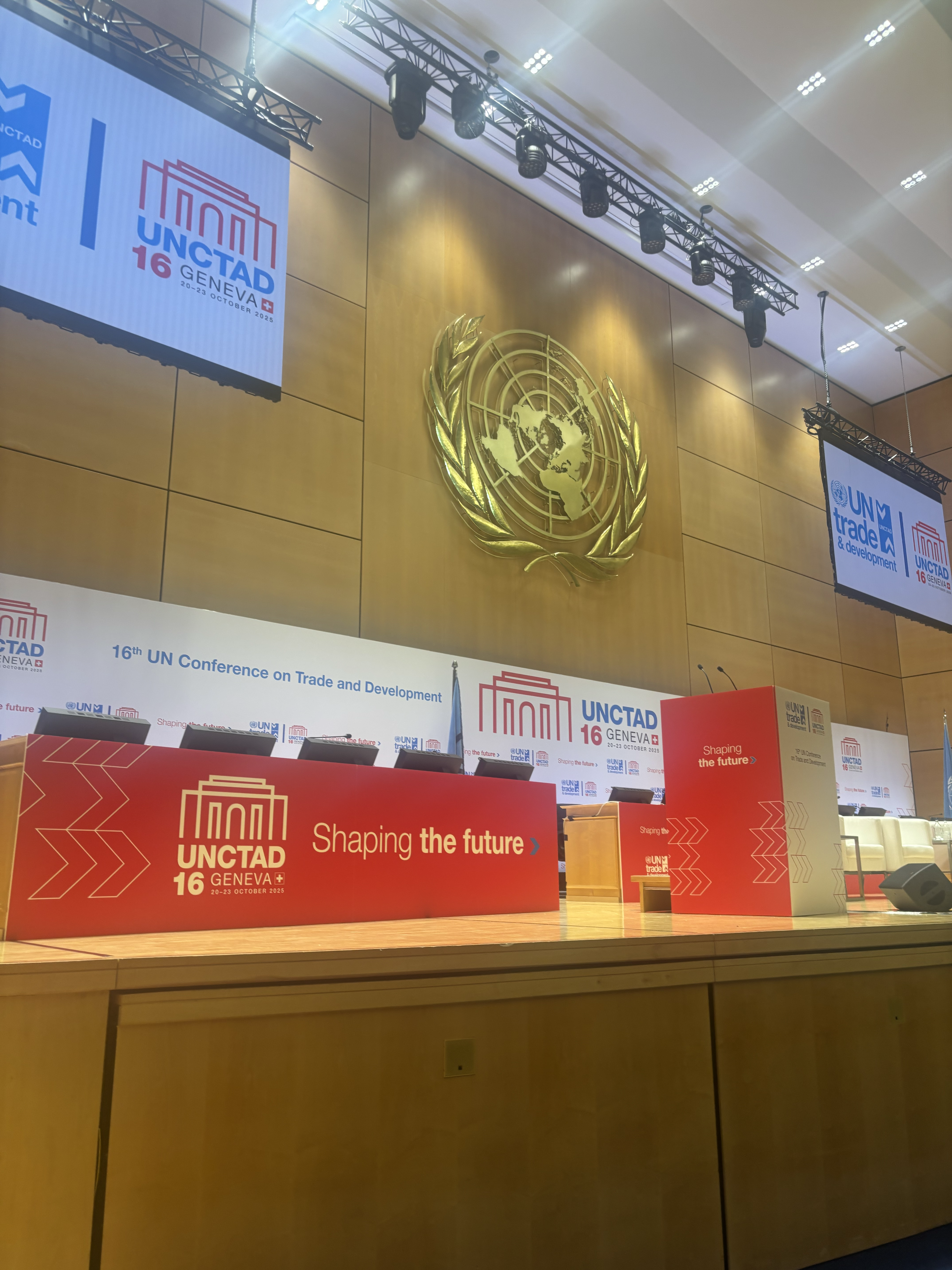
In the photo: UNCTAD plenary. Credit: Valery Salas Flores
From Oxford to Geneva
My experience at Oxford’s MSc in Sustainability, Enterprise and the Environment gave me the analytical and strategic foundation to connect these global debates. Courses on sustainable finance, economics, and systems thinking taught me to see how trade, the environment, and equity intersect, and how effective policy design can translate ideals into measurable impact while avoiding false solutions.
At UNCTAD16, those lessons came alive. Trade, when reimagined around inclusivity and climate goals, becomes one of the most powerful levers for achieving the SDGs. As the Youth Forum concluded, young delegates presented the Youth Declaration, calling for greater inclusion in decision-making and for financial systems aligned with long-term sustainability objectives.
Looking ahead
The world today stands at a crossroads: fragmented, yet full of potential. To harness trade for sustainable development, we must build systems that are diversified, inclusive, and resilient, systems that view young people not merely as participants, but as partners in shaping transformation.
Trade can accelerate sustainable development when it empowers rather than exploits, fairly distributes gains, and integrates environmental responsibility into every transaction. For practitioners and policymakers, the challenge is to ensure that trade moves from extracting value to creating shared value.
Msc SEE alum insights
Valery Salas Flores is an alumna of the Smith School's MSc in Sustainability, Enterprise and the Environment.