
This year’s flagship University of Oxford World Forum on Enterprise and the Environment bought together over 200 climate leaders from business, policy, academia and civil society to explore the face of climate leadership in these geopolitically fragmented times, 10 years on from the Paris Agreement.
You can find the sessions summaries below.
Sign up to our newsletter to be first to hear about our 2027 World Forum!
We are especially keen to hear from individuals and organisations who may be interested in partnering with us for next year’s event. Please email our events team to learn more.
Sessions 1 to 5
- Mike Berners-Lee, Chair, National Emergency Briefing
- In conversation with Lucy Erickson, Head of Strategic Communications, Oxford Smith School
As climate impacts become impossible to ignore, can the National Emergency Briefing help unlock the political will and public support needed to drive UK action on climate and nature?
In this interview with Mike Berners-Lee, Chair of the National Emergency Briefing, we explore the degree to which effective climate leadership requires a new systems level approach – and reflect on what this means for all of us here as we shape this critical decade of action.
Mike Berners-Lee opened the World Forum on Enterprise and the Environment with a powerful and sobering assessment of the climate crisis. While acknowledging the growth of renewable energy and the many years of international climate negotiations and work done by many in the room, he emphasised that global fossil fuel emissions continue to rise. The critical measure of progress, he argued, is whether fossil fuel consumption and overall emissions are actually declining. Framing humanity as the dominant force shaping the Earth's systems, Mike challenged delegates to consider what changes are required across economics, politics, business and societal values if we are to become truly "anthropocene-fit".
Drawing on his role as Chair of the UK’s National Emergency Briefing, Mike outlined the origins and objectives of this initiative. The programme began with a landmark briefing at Central Hall Westminster, bringing together more than 1,200 leaders alongside nine leading climate experts (including Oxford Smith School’s Professor Nathalie Seddon) to present the evidence on the climate and nature crises clearly and honestly, with the aim of building a shared understanding of the challenges ahead and radically improving our chances to solve them.
Summary notes from Benjamin Bøgen Pedersen, Oxford Smith School MSc in Sustainability, Enterprise & the Environment
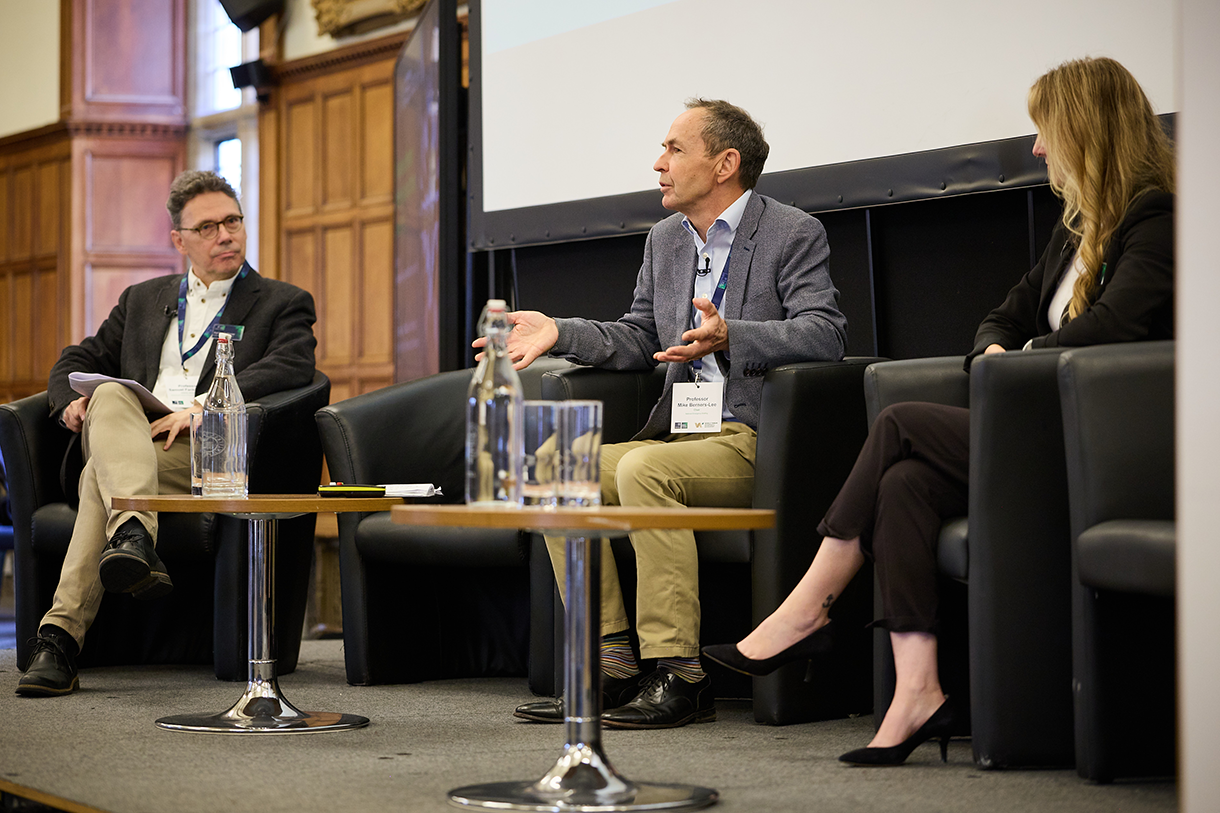
This work has since evolved into the People’s Emergency Briefing, a 50-minute film designed for organisations and communities to watch collectively before participating in facilitated discussions. These conversations encourage participants to process the evidence, explore its implications and identify practical actions they or their organisations can take. With more than 5,000 screenings already held or planned (find a screening near you), this initiative is rapidly expanding its reach and helping to foster informed, action-oriented local dialogue and national influence.
Mike concluded with a clear call to action. Delegates were encouraged not only to host screenings within their own organisations but also to apply greater scrutiny to the interventions they pursue, continually asking whether the interventions genuinely "move the needle" or merely address symptoms while leaving the underlying drivers of the crisis untouched. Understanding the true scale and urgency of the challenge, he argued, is the essential starting point for meaningful collective action and systemic change.
- Alistair Phillips-Davies (CBE), Commissioner, UK Clean Power 2030 Advisory Commission
- Dr Jennie Dodson, Senior Director, WBCSD (World Business Council for Sustainable Development)
- Guy Wolf, Global Head of Market Analytics, Marex
- Tamsin Ballard, Chief Investor Initiatives Officer, PRI
- Moderated by Professor Andreas Klasen, Director, lill Institute for Public Value
The global trade system is becoming increasingly unstable - and climate action is now one of the biggest drivers and casualties of that uncertainty.
Climate change is transforming the global economy faster than the rules that govern it. We explore what happens when the urgency of the climate transition meets a trade system built for a different era. From carbon border adjustments and divergent climate regulations, to supply chain disruptions and competition for critical minerals, the rules that once underpinned global commerce are shifting.
This panel explores how climate policy is reshaping the global trade order - and how trade instability, in turn, shapes the pace and equity of climate action. Bringing together experts in economics, business, geopolitics, and sustainability, we ask: What does a climate-aligned, resilient trade system look like?
The panel examined the increasingly complex relationship between the climate transition and the global trade system. Climate change and the shift to a low-carbon economy are creating new pressures on trade, from carbon-border measures and divergent regulations to competition for critical minerals. At the same time, geopolitical tensions, supply-chain disruption, and national-security concerns are reshaping the conditions under which the transition takes place.
Rather than straightforward deglobalisation, the discussion pointed to a reorganisation of globalisation: trade remains strong and economies remain deeply interdependent even as the rules and institutions governing them come under sustained strain, but the terms of that interdependence are changing. Decisions once driven mainly by cost and efficiency are increasingly being shaped by concerns over national security and supply-chain resilience.
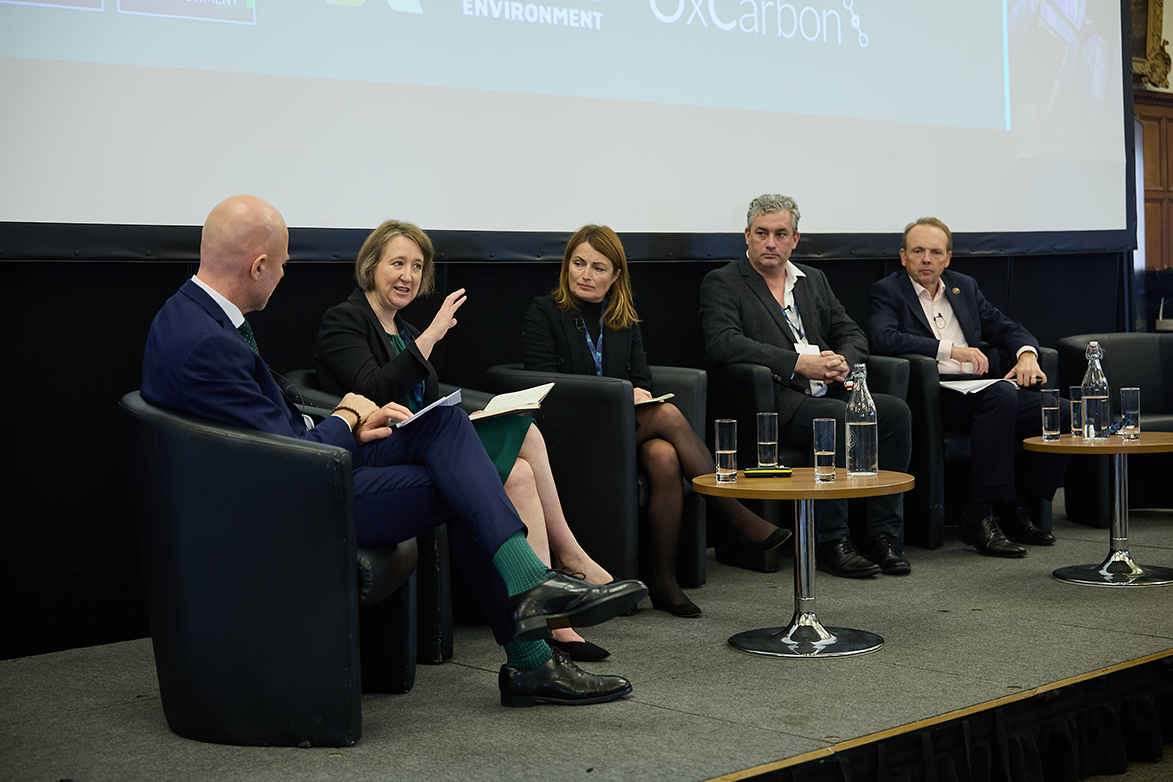
This creates a dilemma for climate action: many of the technologies needed to decarbonise quickly and affordably depend on deeply interconnected global supply chains, while governments are placing greater weight on national security and reducing dependence on concentrated foreign suppliers. China’s dominant position in several clean-energy supply chains makes this tension particularly visible. The cheapest and fastest climate transition may therefore not be the most geopolitically secure.
A strong theme was that, for business, policy certainty may matter more than the level of climate ambition when making long-term investment decisions. Fragmented or frequently changing rules can delay investment, even where climate ambition remains strong. Panellists stressed that businesses may not need perfect policy, but they do need confidence that the policy environment will remain broadly consistent.
The discussion also raised difficult questions about who should bear the added cost of building more secure and resilient supply chains, where legitimate de-risking becomes protectionism, and whether smaller coalitions of countries and other actors can make faster progress on climate-related trade issues than broad multilateral processes. Panellists also stressed that, without policy certainty, long-term capital and risk-sharing for emerging markets, a more fragmented system risks making the transition not only slower but more unequal.
Summary notes from Anna Ghnouly, Oxford Smith School MSc in Sustainability, Enterprise & the Environment
- Dr Amir Akther, Research Associate
- Dr Tanya O’Garra, Head of the Sustainability AI Hub
- Dr Amani Maalouf, Senior Researcher and Integration Lead
- Christophe Christiaen, Head of Spatial Finance Initiative
- Dr Ben Franta, Associate Professor of Climate Litigation
- Hosted by Nadia Schroeder, Head of Strategy and New Initiatives
AI is rapidly transforming how we understand and respond to climate change. This lightning round offers a focused snapshot of where AI is already making a positive difference - advancing climate science, scaling solutions, and supporting better decisions in both research and real-world operations.
Short presentations will highlight successes and emerging opportunities, and we’ll invite delegates to consider where AI can deliver the greatest value - and (in the subsequent panel) what is needed to scale it responsibly for climate impact.
The AI in Action for Climate Impact session explored how rapidly advancing AI tools can address challenges around data collection and analysis to advance climate action. A key theme was that AI is not simply making existing research faster; it is enabling researchers to build datasets and conduct analyses that would previously have been impractical or impossible due to time and resource constraints.
Dr Amir Akther showed how AI can dramatically accelerate data collection and analysis, gathering information across sources in seconds and making larger, longer term and more ambitious datasets practical to build.
The session then examined how AI can improve our understanding of whether climate interventions are actually delivering impact. We witnessed a demonstration from Dr Tanya O’Garra of an emerging tool that combines AI with causal analysis to identify how effective a given intervention had been. The example showed how a conventional approach would have overestimated an intervention’s impact by approximately three times compared to this more accurate approach. The tool could be used to guide funding towards the most impactful interventions, for example.
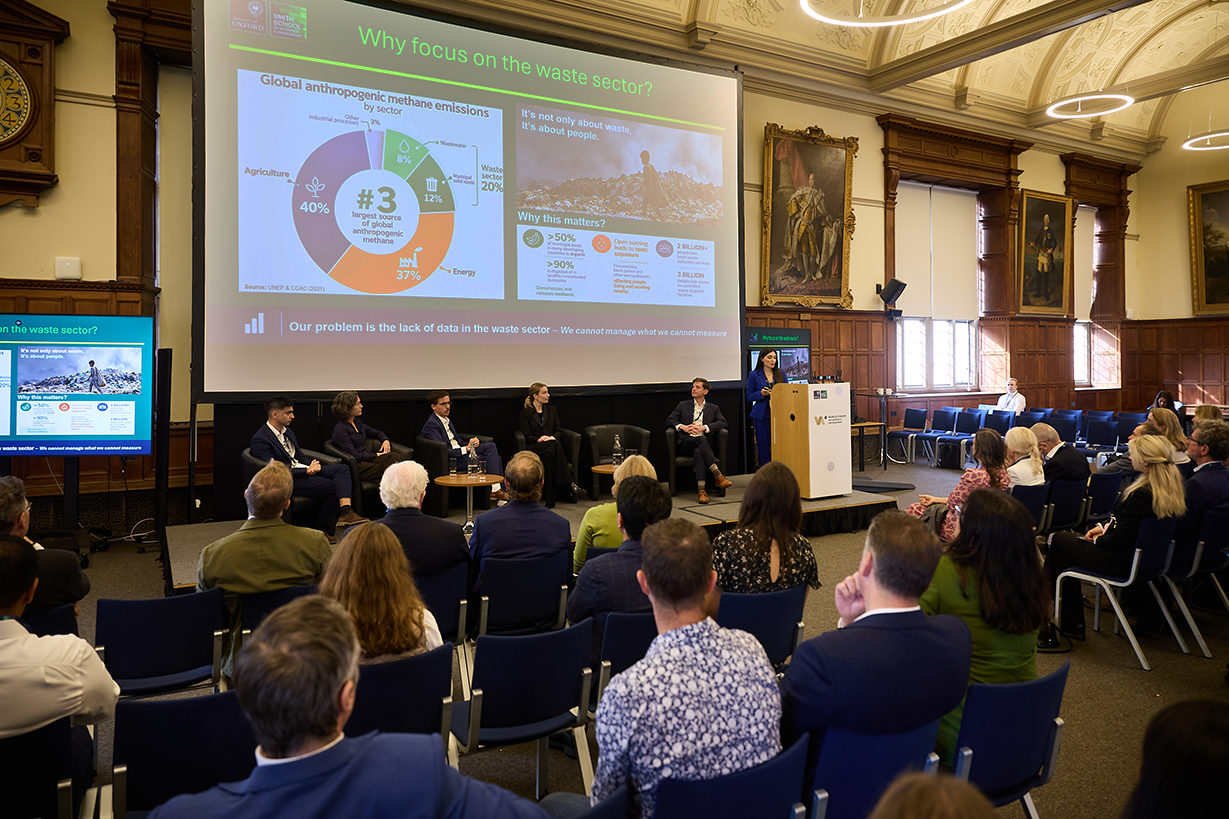
Several speakers highlighted how these capabilities can support practical action. Dr Amani Maalouf showed AI is being used in the waste sector to map waste sites globally, identify high risk locations and assess nearby populations that may be exposed to environmental and health risks; Christophe Christiaen showed how
AI is also creating opportunities in spatial finance by making traditionally difficult to access asset level and geospatial information easier to collect and query; and Dr Benjamin Franta showed how AI-enabled retrieval tools are also making decades of climate litigation and corporate records more accessible. The CLARA tool enables users to ask simple questions of a huge collection of fossil fuel industry documentation, and receive thorough answers linked to source materials, giving new value to large archives that have previously been extremely time intensive to navigate.
Overall, the session demonstrated AI’s potential to turn fragmented information into stronger evidence, enabling more ambitious research and supporting faster, more targeted and accountable climate action.
Summary notes from Margeaux Fortin, Oxford Smith School MSc in Sustainability, Enterprise & the Environment
- Mike Hayes, Global Climate Change and Decarbonisation Leader, KPMG Ireland
- Dr Samira Barzin, Geospatial Economic Analyst, University of Oxford
- Bill Hilf, Board Chair, Allen Institute for AI & American Prairie
- Darsh Myronidis, Chief Impact Officer & Chair, Race to Deliver
- Moderated by Howard Covington, Advisory Board Chair, Smith School
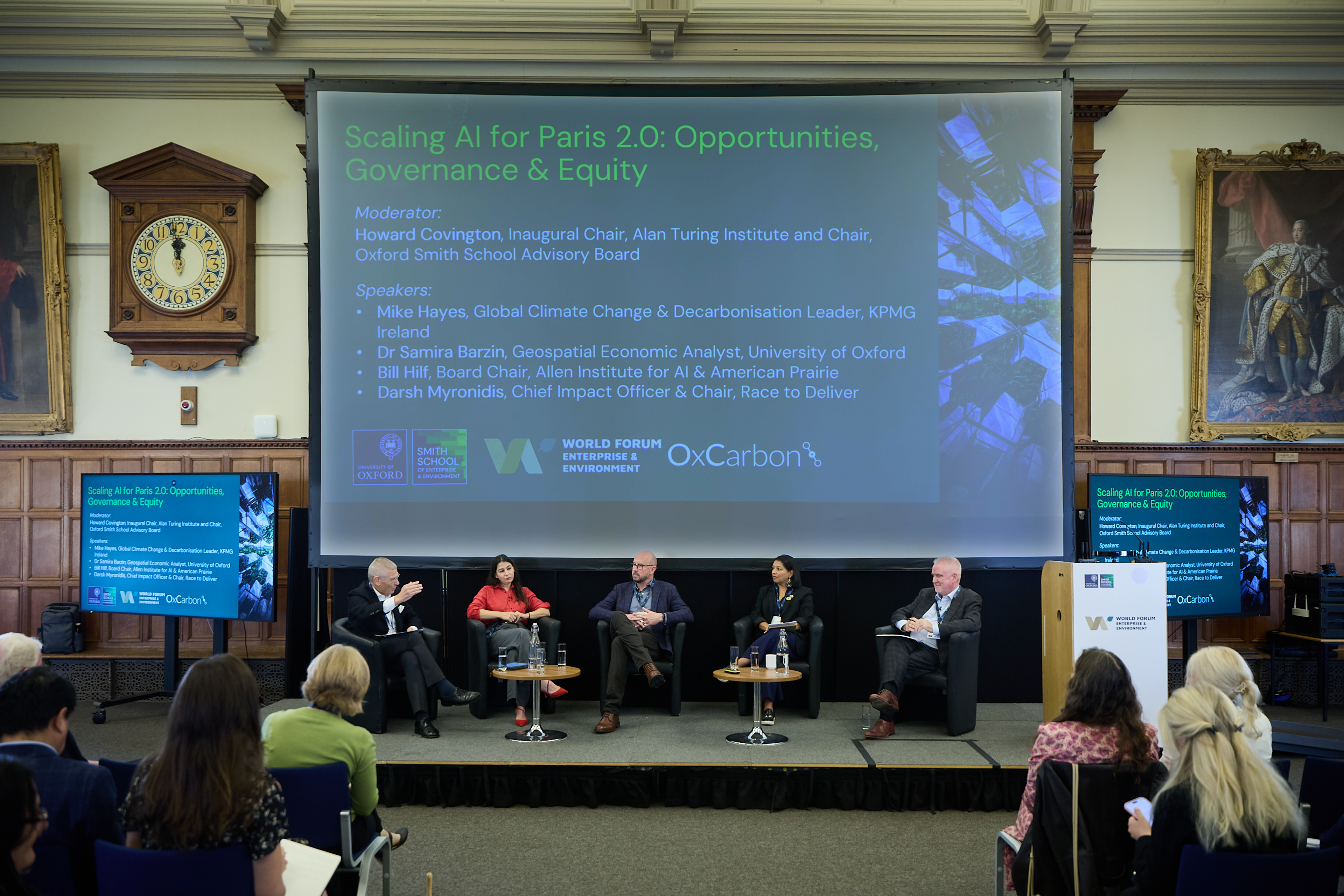
The lightning round will underscore the considerable promise of AI in advancing global climate goals, but leaves open critical questions related to data governance, bias, transparency, energy intensity, and equitable access – particularly for communities most vulnerable to climate impacts.
This panel brings together leading researchers, technologists, and policy experts to explore how AI can be used responsibly and effectively in climate relevant domains, where the greatest opportunities lie, and what guardrails are needed to ensure that the benefits are realized without exacerbating social or environmental risks.
The panel is designed to be interactive, encouraging delegates to reflect and exchange perspectives through small group discussion.
AI presents opportunities, but its rapid expansion raises questions about environmental costs, social inequalities and who it ultimately benefits. While panellists agreed that AI is here to stay, they questioned whether its benefits and burdens are distributed fairly across communities and geographies, and how governments can shape more equitable and sustainable outcomes.
The rapid expansion of data centres raised concerns about energy and water demand, fossil fuel dependence and pressure on local infrastructure. Examples from Essex highlighted tensions between national investment ambitions and local community realties and impacts. The discussion also questioned whether AI reinforces existing extractive economic systems, with emerging economies supplying resources, labour and data while benefits remain concentrated elsewhere (and in only a handful of languages).
Perspectives differed on AI’s climate impacts. Some emphasised environmental risks and inadequate regulation, while others argued that rising electricity demand could accelerate renewable energy investment, grid improvements and innovation – if the proper incentives were in place. The growing role of AI companies as energy investors was noted as an important shift in energy sector.
The discussion identified the following priorities:
- Stronger regulation, transparent environmental reporting and accountability for actual outcomes rather than corporate promises.
- Incentives for energy-efficient ‘frugal AI’, alongside responsible infrastructure and clean-energy investment.
- Open models, equitable data access and technical capacity building, particularly across Global South
- Greater AI literacy among policymakers and businesses, alongside meaningful community participation in decision-making
Audience members questioned whether AI reinforces existing extractive economic systems, whether charging for AI services to account for environmental costs could worsen inequality, and how to effectively use regulation/taxation to influence corporate behaviour.
The session concluded that AI's future is not predetermined but is shaped by the economic, political and institutional systems within which it develops. Realising its benefits will require deliberate policy choices, responsible investment and greater institutional capacity.
Summary notes from Astha Wagle, Oxford Smith School DPhil Candidate
Audience insights
During this session, we asked delegates to reflect on the actions or AI applications that we as climate leaders should champion today across our businesses, governments and organisations to ensure AI becomes a force for climate progress. Participants overwhelmingly called for stronger governance to ensure AI delivers climate benefits while minimising its environmental and social costs.
Key themes included mandating clean energy for data centres, improving transparency around AI’s energy, water and carbon impacts, introducing carbon pricing and accountability mechanisms, and strengthening national and international regulation.
Participants also highlighted AI’s potential to accelerate progress in areas such as clean energy, regenerative agriculture, building efficiency, climate adaptation and industrial decarbonisation. Alongside this, many stressed the importance of education, equitable access, open and responsible innovation, human oversight, and ensuring that the benefits of AI are shared fairly across society and support a just, sustainable transition.
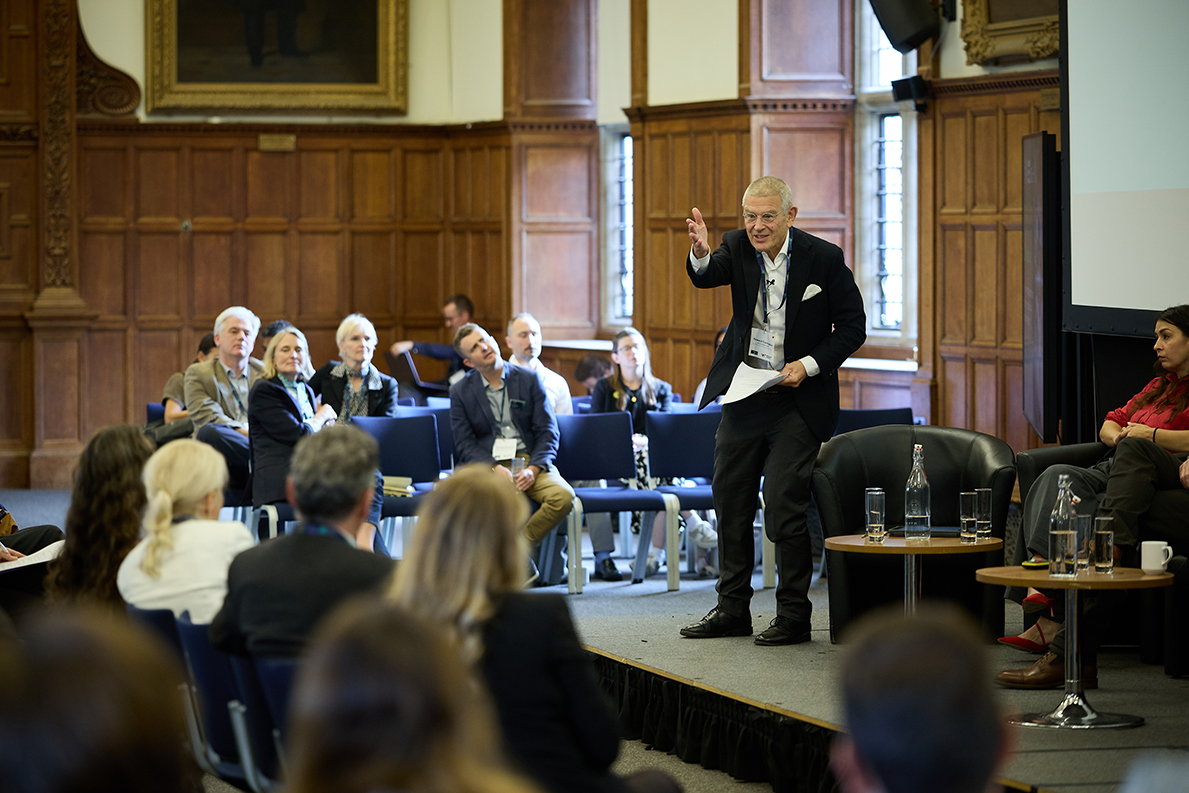
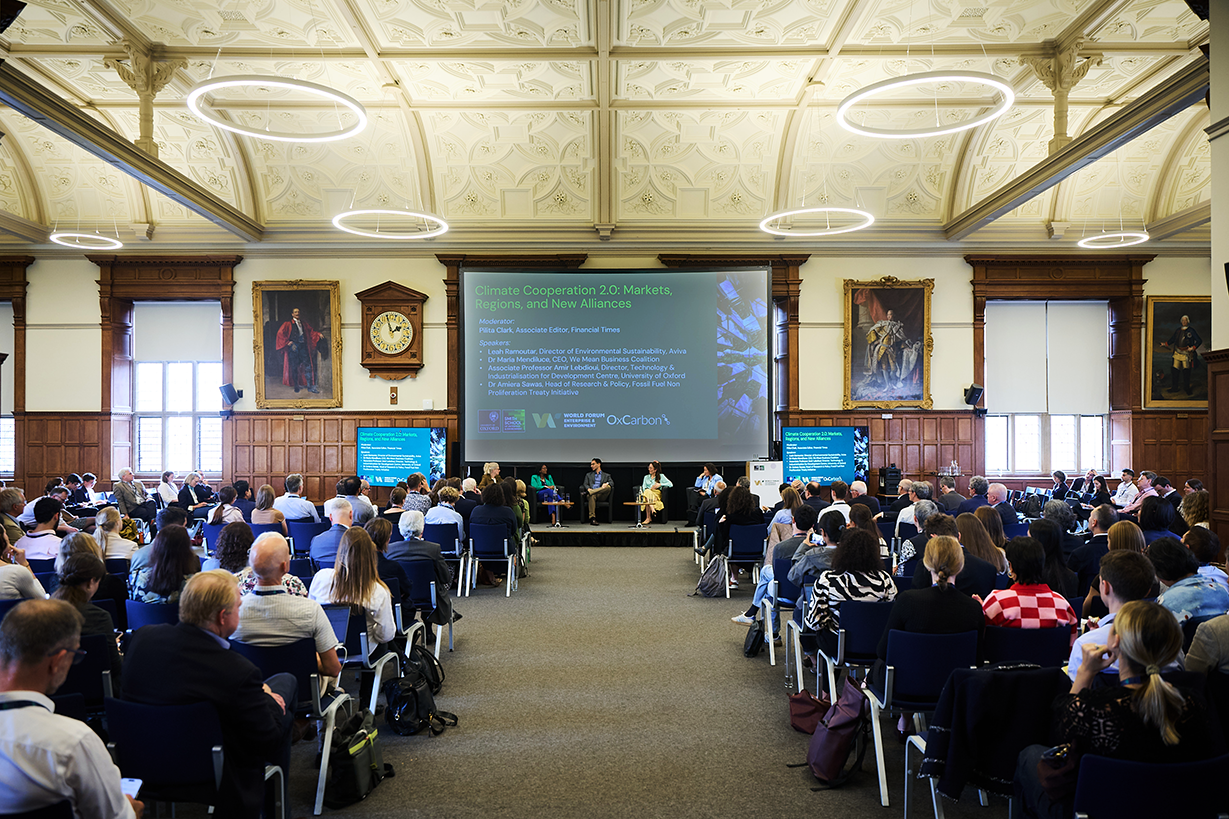
- Leah Ramoutar, Director of Environmental Sustainability, Aviva
- Dr María Mendiluce, CEO, We Mean Business Coalition
- Dr Amir Lebdioui, Director, Technology and Industrialisation for Development Centre, University of Oxford
- Dr Amiera Sawas, Head of Research and Policy, Fossil Fuel Non-Proliferation Treaty Initiative
- Moderated by Pilita Clark, Associate Editor, Financial Times
In an era of intense geopolitical pressure, the Paris climate framework is operating in a world shaped by strategic rivalry, power asymmetries, and diverging national interests. While formal multilateral processes continue, progress toward Paris 2.0 – and the shift from target setting to delivery - is increasingly advancing through flexible, cross regional coalitions involving states and non-state actors alike.
In this context, how are countries, sectors, businesses, and civil society building partnerships that can deliver at scale? What does next generation, delivery focused climate cooperation look like in practice - and can these pragmatic arrangements translate Paris commitments into sustained implementation?
Against a backdrop of geopolitical fragmentation and signs of a rollback in climate ambition, this panel argued that climate cooperation is becoming more implementation-oriented, shifting from headline targets and broad global coalitions towards practical, sector-specific and regional collaboration.
For businesses and financial institutions, a central challenge is Scope 3 emissions arising from suppliers, investments and other activities they influence but do not directly control. Delivery cannot therefore rely on corporate targets alone, but also requires engagement across supply chains and investment portfolios, supported by public policy that makes lower-carbon choices feasible. Panellists noted that greater caution around public climate claims, partly driven by litigation and reputational risks, has also brought more rigorous governance, evidence and due diligence.
The discussion also stressed that climate cooperation in the Global South needs to support transition pathways that align with development priorities and national circumstances. Differences in industrial structure, fiscal dependence on fossil fuels and access to technology mean that the pace and form of transition will vary across countries. Effective cooperation was framed less as prescribing transition pathways and more as strengthening countries' capacity to shape their own transitions, supported by technology transfer and scientific collaboration. It also requires addressing structural constraints, such as debt burdens and long-term investment agreements that can lock countries into fossil-fuel dependence or expose them to legal and financial risks if they change course.
Audience discussion on the challenge of financing upgrades to existing commercial buildings highlighted how climate action often involves significant upfront costs, while the economic losses avoided through action are less visible. Panellists argued that climate decisions should therefore account for the cost of inaction, not only the immediate cost of transition. Looking ahead, panellists expected greater reliance on regional cooperation and issue-specific partnerships among actors willing to move ahead with practical implementation.
Summary notes from Erika Sawada, Oxford Smith School MSc in Sustainability, Enterprise & the Environment


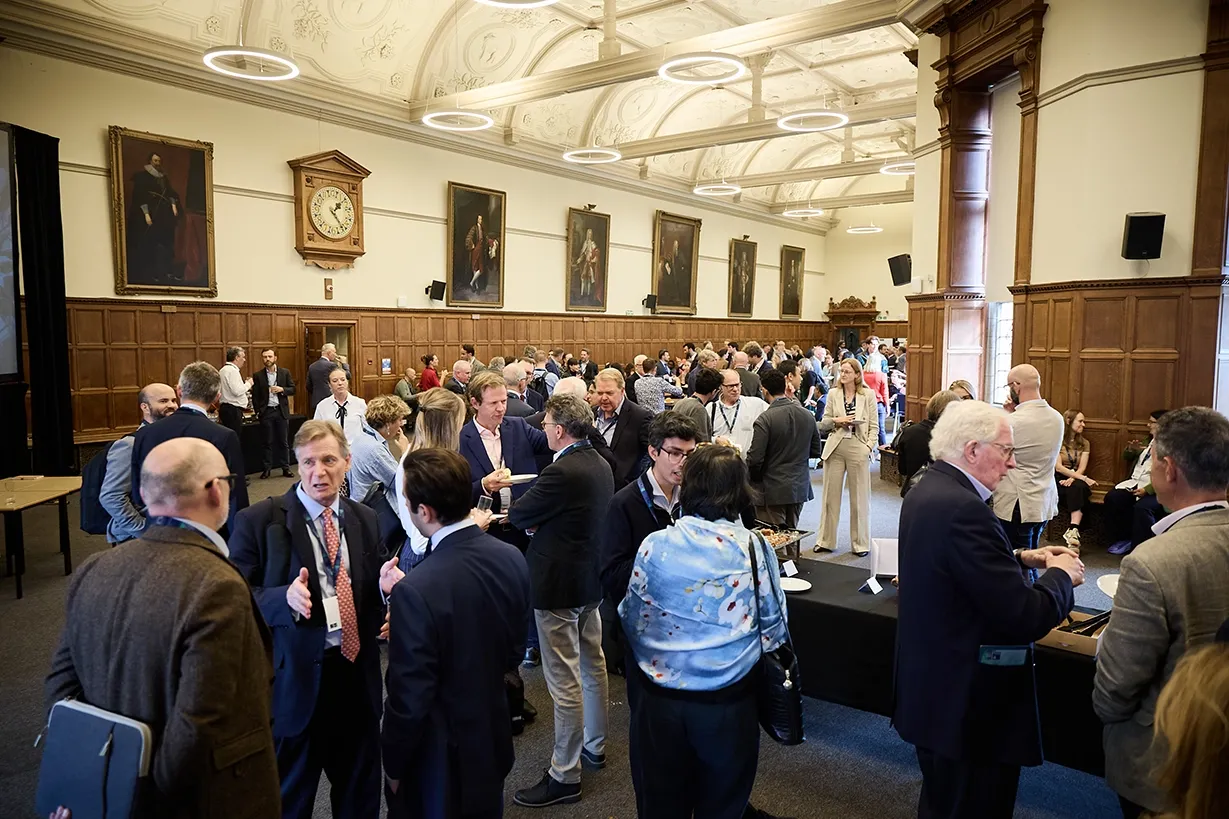
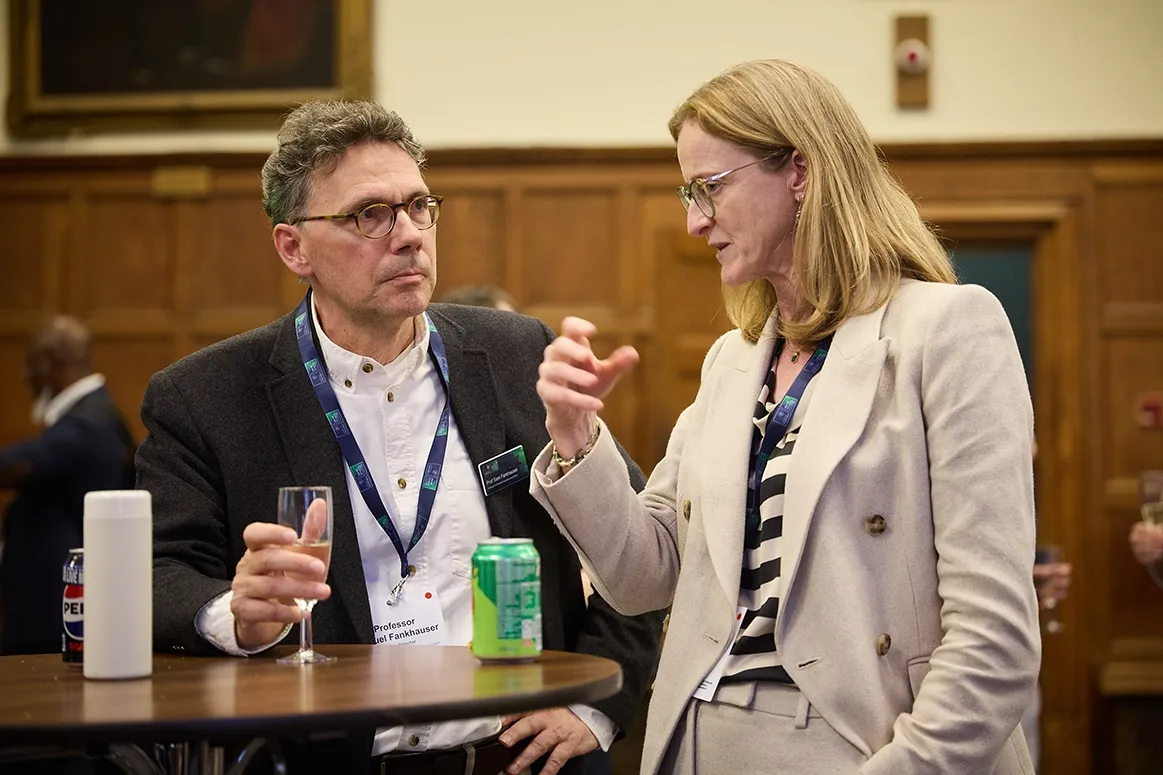

Sessions 6 to 10
- Dr Caitlin McElroy, Departmental Research Lecturer
- Dr Samira Barzin, Geospatial Economic Analyst, University of Oxford
- Lucy Crane, Founder, Tutwork
- Henry Hall, Partner, ERM
Session held under Chatham House rule
Demand for critical minerals is accelerating rapidly as the energy transition gathers pace - pushing exploration and extraction into new environments and communities.
This session will briefly set out the scale and urgency of the challenge, before showcasing a series of mini case studies highlighting emerging research for solutions. These include innovations such as geothermal mining, advances in circularity and supply resilience, and the impacts of evolving policy landscapes, from investment incentives to environmental and social protections.
We will close with an interactive discussion on the trade-offs and opportunities for shaping a sustainable and secure minerals future.
This breakout session examined the challenges of increasing mineral supply while managing the environmental and social impacts of extraction. Speakers highlighted that new mines can take around 17 years to develop, while declining ore grades often require more material to be extracted and processed. These long timelines make decisions taken today significant for decades to come.
Existing resources could help close part of the gap. Speakers discussed the potential to recover minerals from mine waste and tailings, as well as from existing deposits and lower-grade resources. Better geological characterisation, satellite monitoring, AI and improved extraction technologies were also discussed as ways to better identify and recover mineral resources. Reprocessing mine waste and tailings could not only recover minerals from existing waste, but potentially also reduce the need for entirely new mining sites.
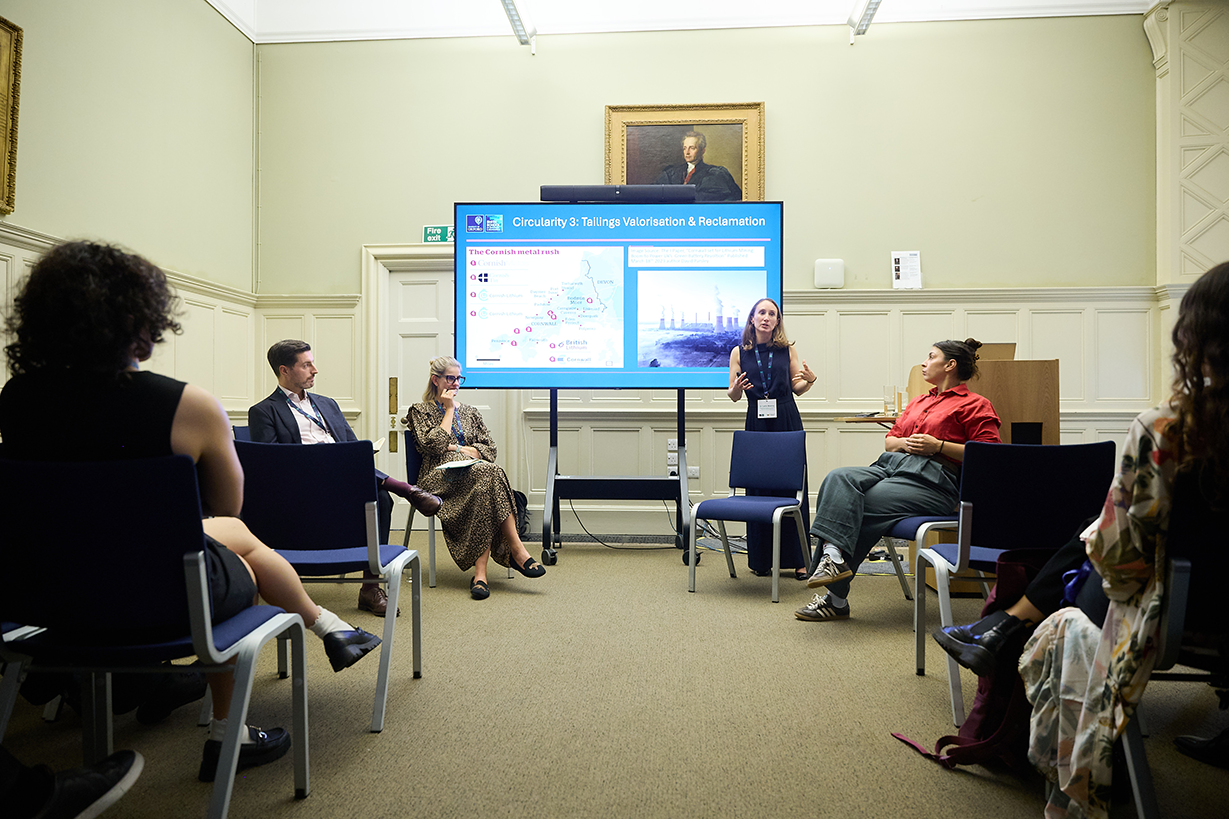
Environmental and social consequences of extraction were a major part of the discussion. Speakers used cobalt mining in the Democratic Republic of Congo to illustrate the human scale of these impacts, including mining operations close to homes, exposure to impacts on water and air and reported human rights concerns. The discussion then broadened to questions of governance, transparency, artisanal and small-scale mining and who ultimately benefits from mineral extraction.
Speakers also considered mine closure and legacy liabilities, asking who should bear the costs when environmental problems remain after a mine closes. Community participation, compensation and the involvement of local and indigenous communities in decisions about mining were also raised. The discussion showed that expanding mineral supply will require attention to production, environmental impacts, governance and the communities living alongside mining operations.
Summary notes from Justice Appiah Nuamah, Oxford Smith School MSc in Sustainability, Enterprise & the Environment
- Radhika Khosla, Professor of Environmental Science and Policy
- Dr Anupama Sen, Associate Director, Impact
- Ed Davey, Head, World Resources Institute Europe (UK Office)
- Dr Richard Millar, Director - Adaptation, Climate Change Committee
- Graeme Maidment, Professor of Heating & Cooling, London South Bank University
Session held under Chatham House rule
Extreme heat from rising temperatures is an established multidimensional hazard, with implications for the energy systems, the built environment, public health, industry supply chains, and economic productivity, among many other factors. The evidence increasingly points to the fact that temperature rises exceeding 1.5 degrees will have similarly disruptive impacts on the economies and societies of the Global North and Global South; yet in most countries, heat resilience is yet to be understood and implemented. There are also limited governance or multisectoral regulatory frameworks to inform the tens of billions of investments urgently needed in improving societal and economic resilience to it.
This session will explore the multisectoral risks to extreme heat, in the public and private sector, and bring in multidimensional and global perspectives on which sectors, actors, and governments are leading on their responses to it.
The session focused on the sector-specific risks associated with extreme heat and, crucially, how to move from understanding the problem to implementing solutions.
The severity of the challenge is increasingly well established. Research presented during the session showed a 65% increase in heat impact as warming moves from 1°C to 1.5°C. By 2050, the share of the global population experiencing extreme heat could double beyond 2°C from 23% (1.54 billion people) in 2010 to 41%, equivalent to around 3.79 billion people.
Heat cuts across health, infrastructure, biodiversity, business, energy and finance, yet responsibility for responding to it often remains fragmented.
A recurring question was whether heat has become a “governance orphan”: a risk spanning so many sectors and levels of government that no single institution fully owns it. Participants highlighted the need for clearer mandates, better monitoring, dedicated funding, and stronger coordination.
The discussion also explored risks to urban liveability and resource security. Those on lower incomes are often the most exposed and have the fewest options for adapting, making extreme heat as much a question of inequality as climate resilience. Better local and hyperlocal data could help identify vulnerability and target interventions more effectively.
Cooling was another major theme. Solutions already exist, from passive cooling and retrofits to greener urban infrastructure and more efficient cooling systems, but the challenge is deployment at scale without increasing energy demand and emissions. The Oxford Smith School has pioneered work in the area, and WRI’s Cool Cities Lab was highlighted as one example of how hyperlocal data can help cities identify heat risks and appropriate interventions, including urban greening, cool roofs and shaded public spaces.
The dialogue around the Global Cooling Pledge also highlighted how international initiatives can help create a stronger platform for countries and communities in the Global South to shape global action on cooling and extreme heat. Participants stressed the importance of ensuring that their experiences, priorities and locally developed solutions are reflected in global frameworks, while supporting greater knowledge exchange across regions and contexts.
Finance emerged as both a barrier and an opportunity. Heat can be insurable, but affordability and financial viability remain challenges, requiring a mix of public funding, philanthropy and private capital.
The clearest message was that the problem is well understood. The priority now is turning knowledge into coordinated, equitable, and locally relevant action.
Summary notes from Nethmi Jayaratne Kariyawasam, Oxford Smith School DPhil Applicant
- Kaya Axelsson, Director of Impact, Oxford Net Zero
- Abby Chase, Impact & Engagement Executive Officer, Oxford Net Zero
- John Lang, Net Zero Tracker Leader, Energy and Climate Intelligence Unit
Session held under Chatham House rule
Over the past decade, climate governance has been defined by a wave of voluntary corporate pledges and net zero commitments. The emerging challenge now is implementation. While flashy stage announcements, sign up campaigns, and public pressures once drove voluntary net zero commitments, these are not the drivers of progress. In response, a new generation of voluntary initiatives, built on business opportunities and risks, are shifting the focus from headline commitments toward the practical infrastructure required to deliver decarbonisation. These initiatives are increasingly functioning as implementation alliances, coordinating quietly through capital deployment and corporate speak to deliver key systemic solutions to unstick barriers in the net zero transition.
This session explores this new face of climate coordination for the progress era of the corporate climate transition, as well as evolving governance arrangements to turn commitments into credible decarbonisation pathways.

Climate cooperation has entered a new area: one defined no longer just by commitments and ambition, but requiring implementation and action. Businesses, governments, and civil society organisations now look to implementation alliances to turn commitments into delivery and planning for deploying the capital, infrastructure, and system solutions necessary to deliver net zero.
This was an an interactive session sharing best practices and lessons learned in the formation and operations of implementation alliances. This included a review of the next phase of Race to Zero, a new global implementation alliance called Race to Deliver. The Net Zero tracker’s success with target monitoring was also shared as a way to quantify implementation and track the integrity of commitments.
Participants had a lively discussion on the building blocks necessary to create implementation coalitions, including: combining global ambition with place-based knowledge, engaging resistance rather than avoiding it, designing coalition around conditions needed for delivery, aligning implementation with the business case, and starting with a specific problem and theory of change. The group identified common barriers to implementation like policy uncertainty, misaligned interests, and the need to transform business models.
Flexibility, resiliency, and bottom-up alliances were also highlighted as important for implementation, to allow stakeholders to collaborate on areas of mutual interest, and to continue building bridges, either at local regional or international level. The Oxford Net Zero team will now use this feedback and advice to continue co-creating the Race to Deliver Initiative, support other leading climate convenings, and build out further research on implementation alliances.
To hear more about Race to Deliver or get involved, please reach out to secretariat@race-to-deliver.com
Summary notes from Cassandra Etter-Wenzel, Oxford Smith School DPhil Candidate
- Alexis McGivern, Head of Stakeholder Engagement, Oxford Net Zero
- Julie Forchhammer, Co-founder, Klimakultur SA (Norway)
- Thiago Jesus, Co-Director, People’s Palace Projects, Queen Mary University of London
- Recorded contribution from Liam Kanegha, Magamba Network
Session held under Chatham House rule
Climate advocates often preach to the converted, but what happens when climate messages travel through football stadiums, music festivals, and hospital wards? This panel brings together three changemakers from the worlds of sport, culture, and health to explore how climate action can be scaled through unexpected alliances and mass-reach networks.
From challenging fossil fuel sponsorship in sports, to mobilising musical festivals as forms for client engagement, to connecting the dots between planetary and human health, these panellists will discuss how to embed climate into arenas far beyond our traditional echo chamber.
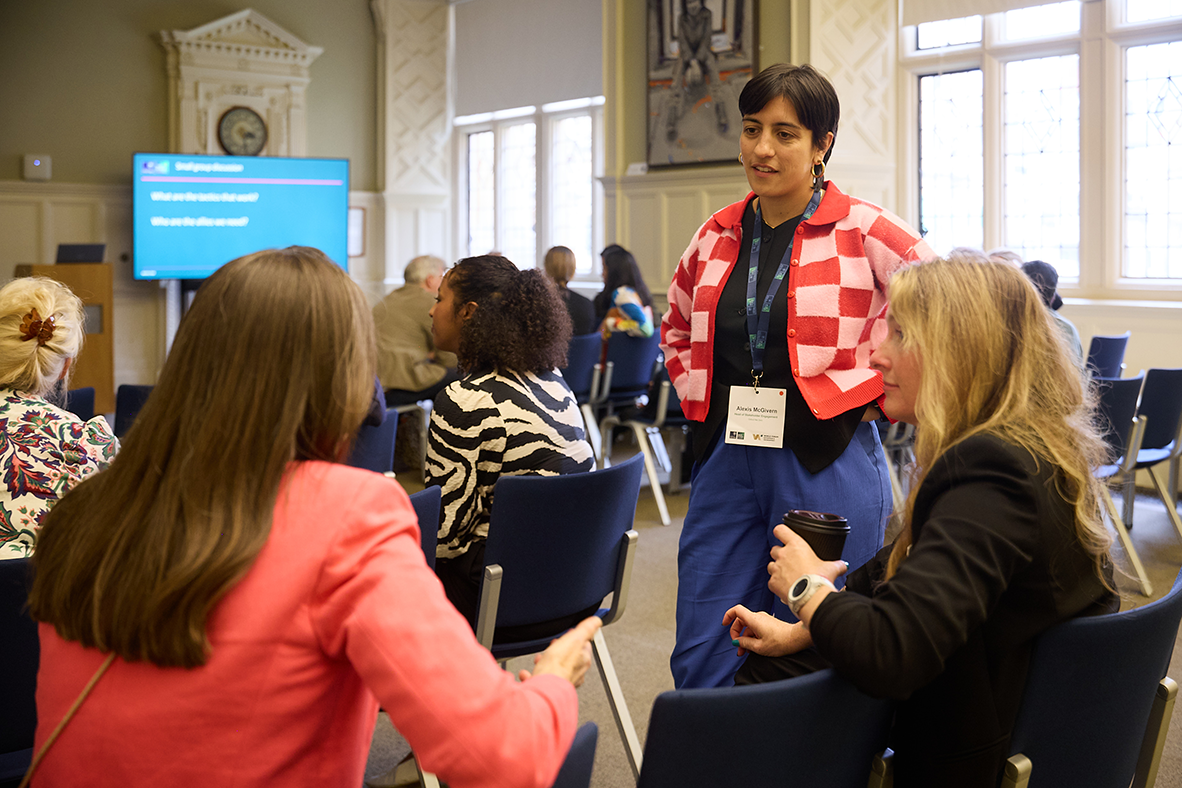
From youth dance passes to advertisement on football fields, sponsorships from companies with deep ties to the fossil fuel industry are rampant.
In the face of such problematic presence, the session asked the questions: how can music, sports and culture avoid falling into fossil fuel sanitisation and what role does community engagement hold in the process?
To provide the room with a glimpse at possible solutions, academics as well as guest speakers in activism and civil society organisations shone light on three initiatives at the frontlines of climate action. Guest speakers explored:
- How alliances can be built through satire, poetry, dance, and storytelling to prevent polluters from intruding into football competitions across Africa.
- How the cultural embeddedness of the fossil fuel industry in Norway (and beyond), cemented by education programs and sponsorships for children’s games, could be resisted through grassroots festivals, artist activism, and including ministries of culture into global climate summits.
- How activists, artists, researchers, and civil society could come together and challenge climate injustice through preservation and restoration of indigenous sites, stories and traditions in Brazil.
The room was then asked to reflect, in small groups, on what tactics for climate action might work and what allies were needed. Lively conversations then ensued, with participants sharing the importance of greater coordination across activist groups, while others suggested that civil disobedience could be more disruptive than solution oriented. The room then discussed the complex funding architecture that ties cultural institutions, governments, and universities to the fossil fuel industry.
The debate was concluded with the hopeful reminder that different sectors, backgrounds, and expertise could converge to strengthen the climate movement, mobilise people, and bring about change.
Summary notes from Malo Gledhill, Oxford Blavatnik School of Government Researcher
- Kaya Axelsson, Director of Impact, Oxford Net Zero
- Samuel Watson, MPP candidate at Blavatnik School of Government, University of Oxford
- Jacob Chavara, Founder, Strategic Advisor, Chavara & Associates, LLC
- Saker Nusseibeh, CEO, Federated Hermes Ltd
- Emily Cruz, Serviced Emissions Consultant, Oxford Net Zero & MBA candidate at Saïd Business School
- Mike Hemsley, Director, Systemiq & Deputy Director, Energy Transmissions Commission (ETC)
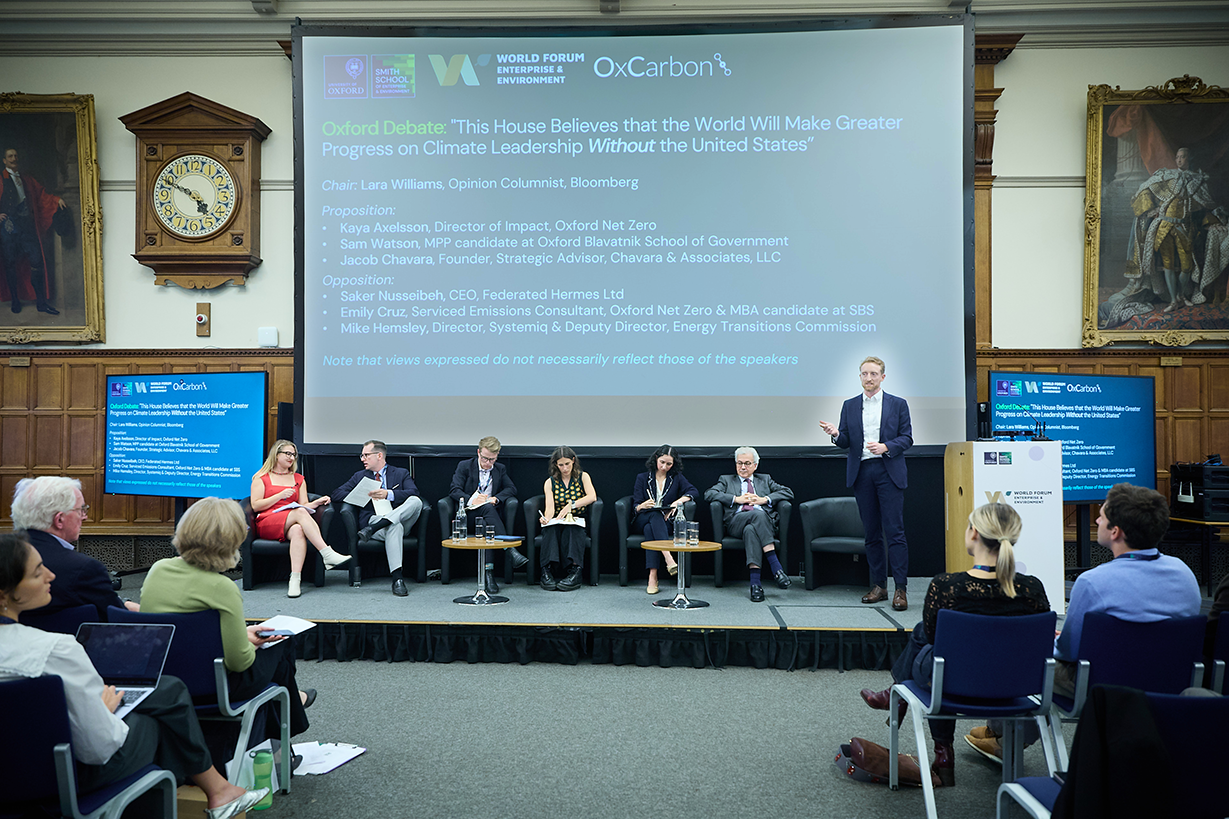
- Chaired by Lara Williams, Opinion Columnist, Bloomberg
Note, views expressed did not necessarily reflect those of the speakers
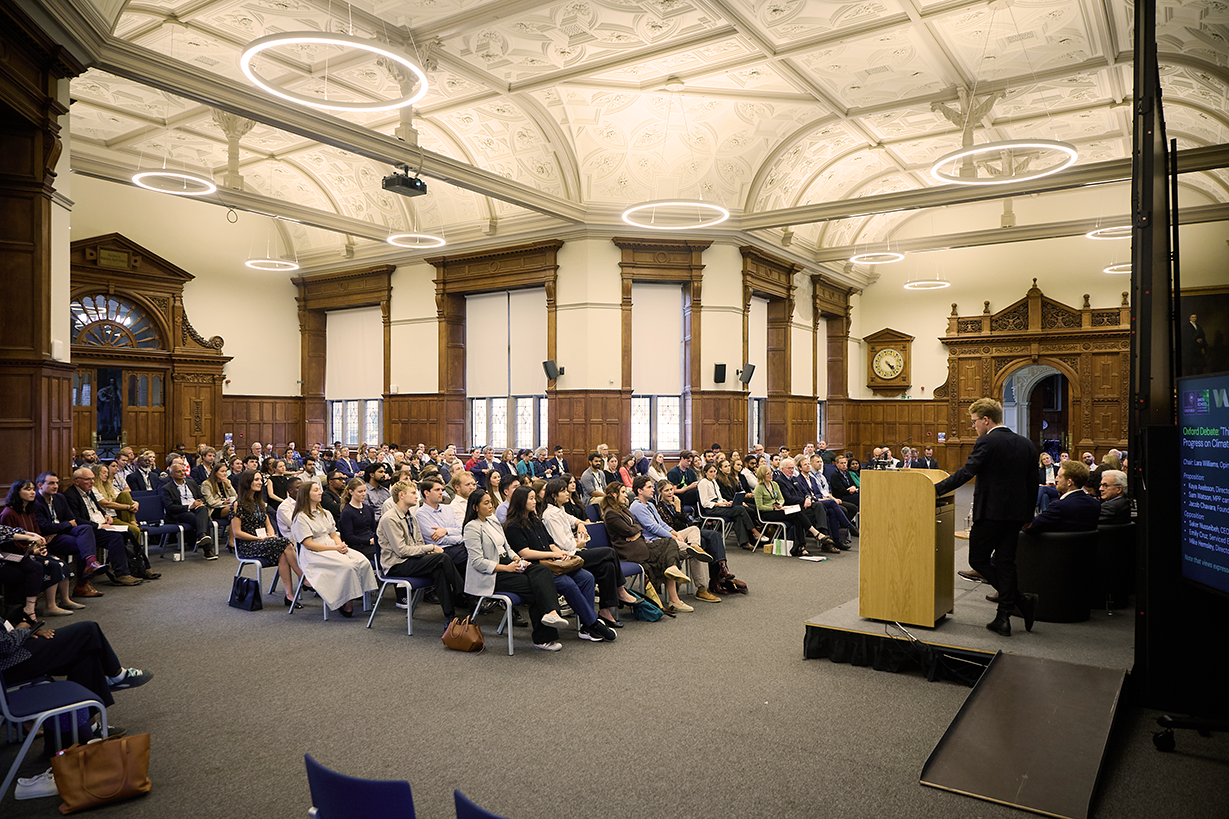
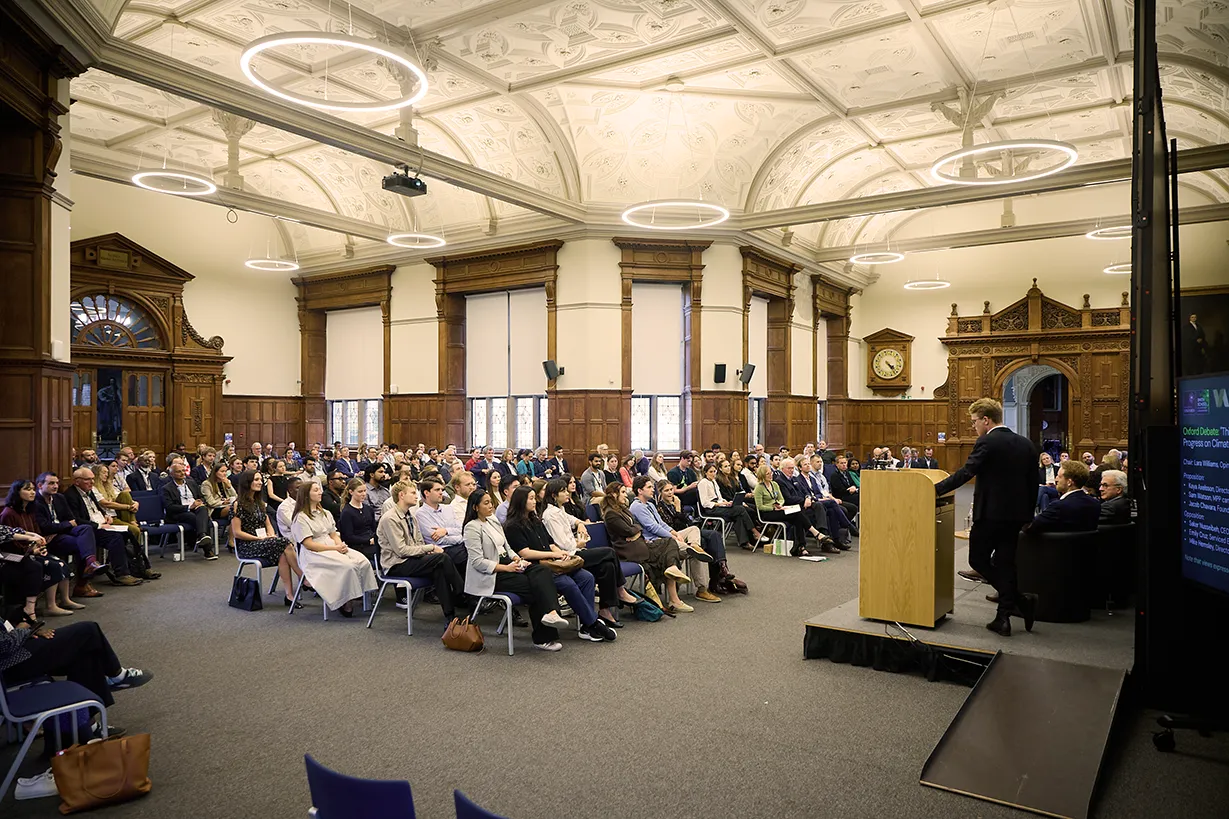
During our signature Oxford-style debate, experts spanning academia, policy, consulting, and finance gathered to deliberate whether global climate initiatives move forward more effectively in the absence of United States involvement. Participants defended assigned viewpoints, with the final outcome determined by audience vote tallies.
Characterizing the US as a "toxic ex," the proponents contended that American political inconsistency consistently undermines global efforts. They highlighted a historical pattern of hindering international ambitions, from the Kyoto Protocol through the Paris Agreement, driven by deep ties to fossil fuel interests. Conversely, they emphasized how China's expanding manufacturing capacity has lowered clean technology costs below fossil fuel baselines. Summarizing this position, one panellist noted: "Progress on climate does not wait for American leadership; it starts where American leadership ends."
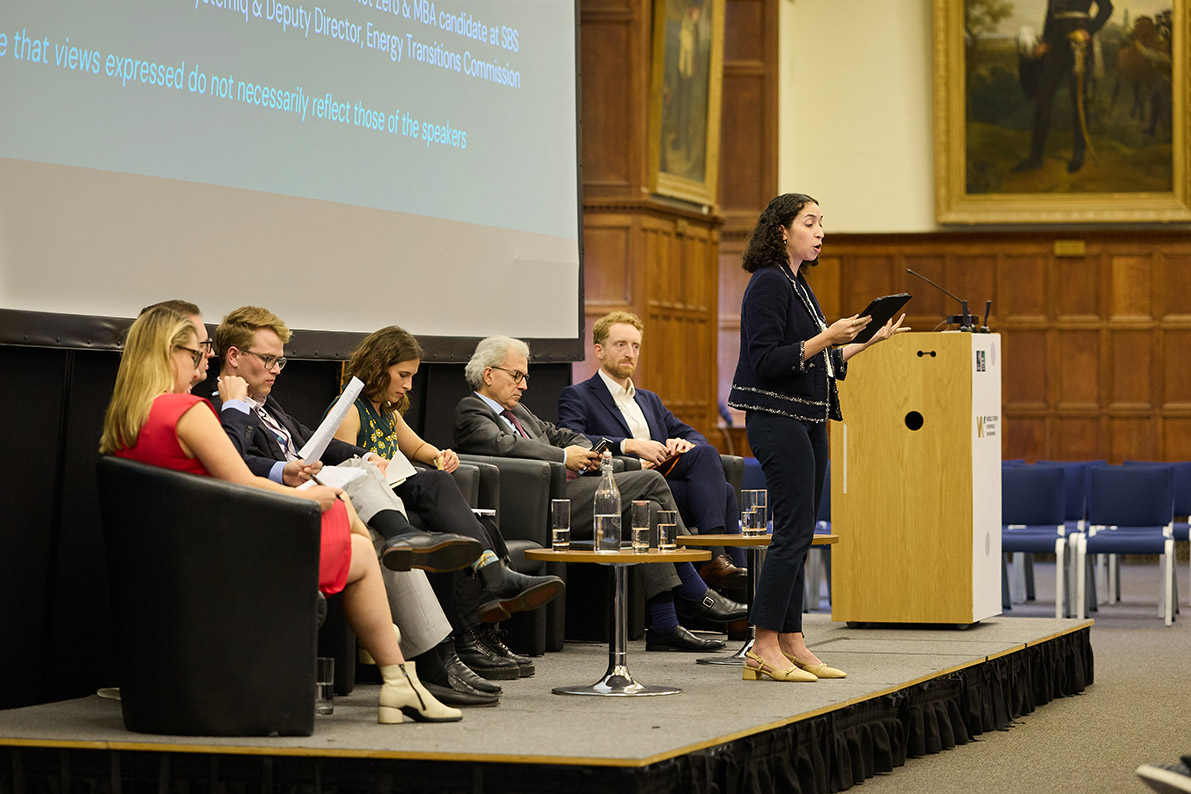
Opponents countered that the central challenge is maximizing the speed of global action rather than proving progress can occur independently. With the US accounting for nearly 25% of the global economy and cumulative historical emissions, its participation remains indispensable to addressing global climate projections. Framing the objective around engagement, one speaker observed: "The best results don't come from convincing people who already believe. You change the world by convincing others to change their minds." They asserted that efforts should focus on demonstrating to US leadership that mercantilist policies are self-defeating compared to sustainable economic strategy.
In closing remarks, the proposition asserted, "that is how you convince the US"; a statement the opposition promptly framed as an admission of America's fundamental importance.
Ultimately, the opposition secured victory, growing their vote count from 66 to 82 while support for the proposition declined from 39 to 36. The debate was an uplifting and fitting end to our 2026 World Forum on Enterprise and the Environment which this year looked at the changing role of climate leadership 10 years on from the Paris agreement.
Summary notes from Juliette Mangini, Oxford Smith School MSc in Sustainability, Enterprise & the Environment
Event Details
| Date | Tuesday 29 September 2026 |
|---|---|
| Time | 08:30 - 20:00 |
| Location |
University of Oxford, Invitation Only
|