
The Oxford Sustainable Law Programme, based at the University of Oxford, is a joint initiative of the Smith School of Enterprise and the Environment and the Faculty of Law. We draw on wide-ranging expertise from across the University of Oxford and collaborate intensively with our international partners in the academic, public, private, and not-for-profit sectors.
Launched in 2021, the Programme is a world-leading centre operating at the intersection of law and sustainability. Our work is multidisciplinary, rigorous, and informed by practice. We are impact-oriented thinkers who see the law as a tool to catalyse the sustainability transition.
Our work
Our focus is on actionable research, impactful education, and multi-sectoral engagement that translates insight into practical application. Learn more about what we do.



Latest news

The climate crisis is already affecting childhood: in Argentina, the number of children at risk from heat stress will increase by 65%
Children are particularly vulnerable to climate change impacts and will face intensifying effects of climate change during their lifetimes, according to a new study co-authored by Dr Rupert Stuart-Smith.

Courts are doing their part on climate, but is anyone else?
Maud Sarliève examines a recent landmark ruling by the Tribunal judiciaire de Paris against Total Energies, where the court ruled that Total Energies surveillance plan was legally deficient for excluding 'downstream' emissions. However, she cautions it remains to be seen whether the necessary regulatory, political and corporate action follows. Maud leads the Climate Research Forum at the Oxford Sustainable Law Program.

3 reasons why Europe can’t stop sweating this week
Dr Mireia Ginesta told Politico that climate change may not have directly caused the "heat dome" over Western Europe this week, but it raises the background temperature on which weather systems operate. "In a cooler climate, this heatwave would have been less intense," she said.
Events

Oxford at London Climate Action Week 2026
For the first time ever, the University of Oxford is hosting a two-day event at LCAW showcasing new research, policy insights, and corporate action. We hope to see many of you there!

London Climate Action Week 2025
We are looking forward to London Climate Action Week and hope to see many of you there. Here's a sample of events where you can hear from Smith School researchers.
Navigating legal risks and opportunities of climate change
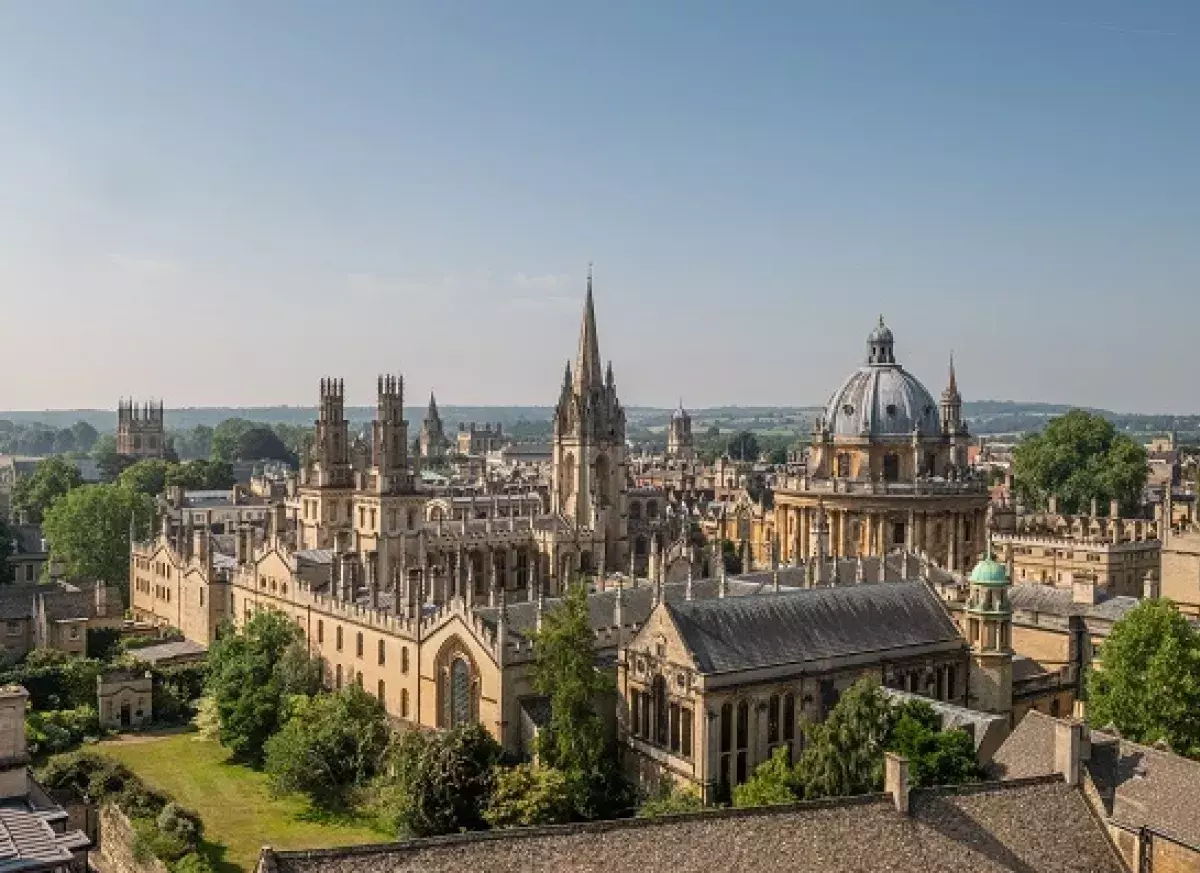
Join course co-directors, Professor Thom Wetzer and Dr Rupert Stuart-Smith, who will provide an introduction to the course and an overview of what to expect when joining us at the University of Oxford in September 2025